
In focus: Perennial ryegrass
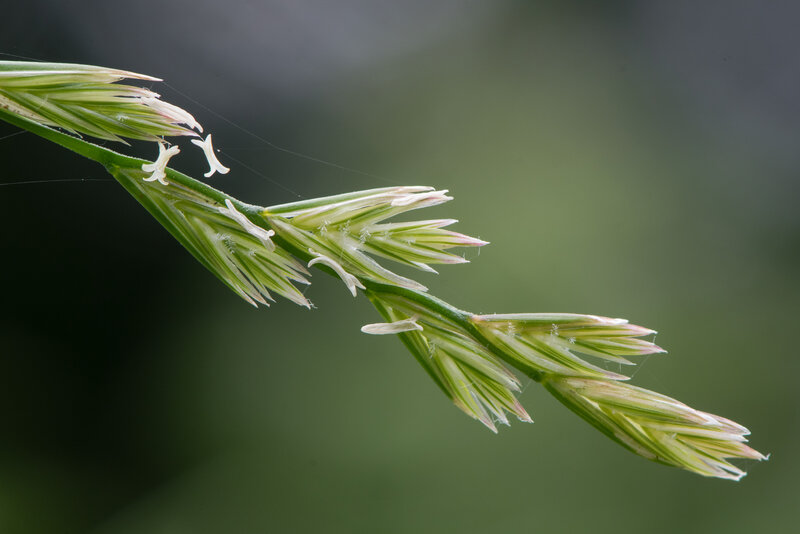
Perennial ryegrass
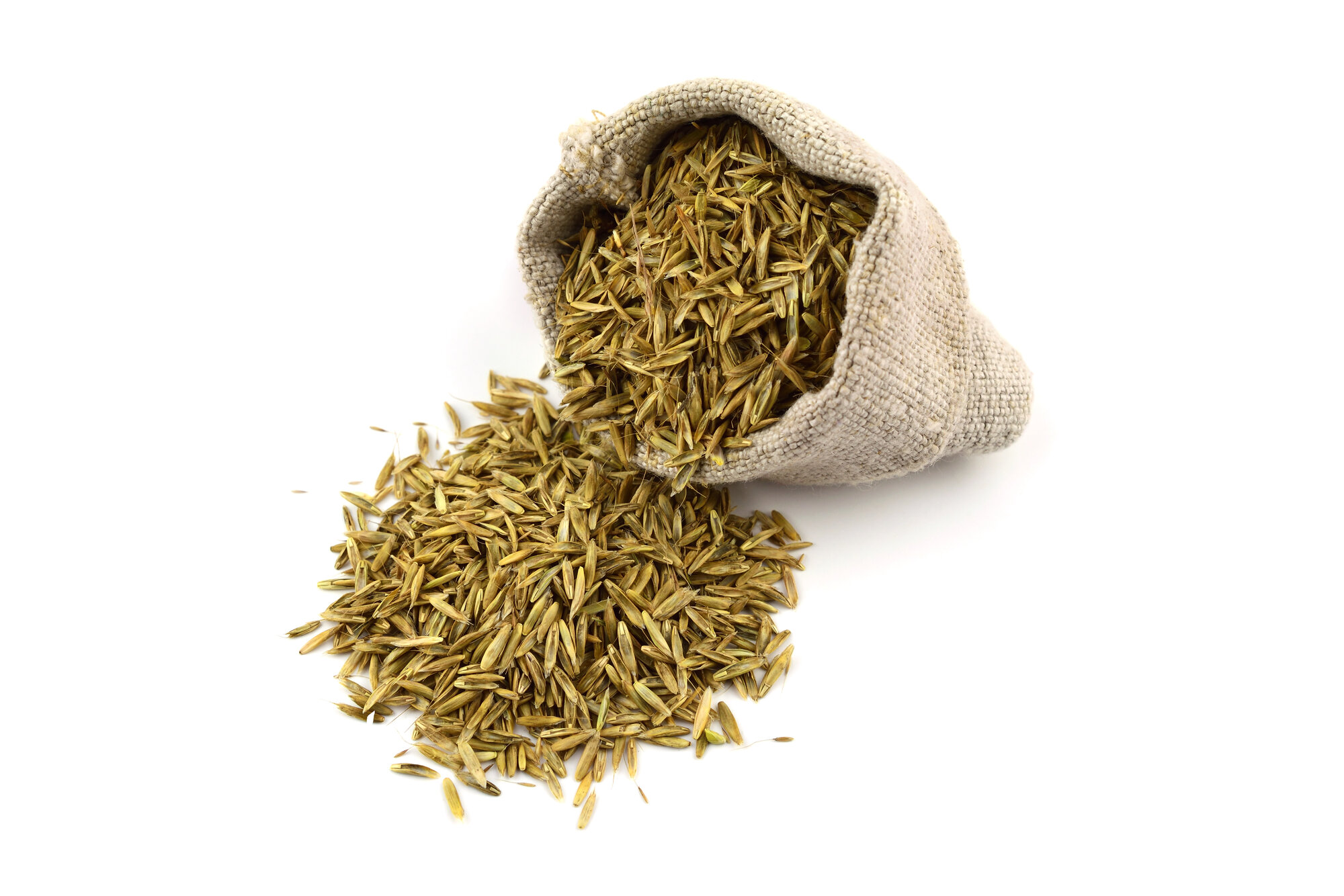
Lolium perenne
Other names: English ryegrass, winter ryegrass or ray grass
| Family: Grasses (Poaceae) | Thousand-seed weight: 2-4 g |
| Tribe: Pooideae | Plant height: 30 to approx. 70 cm |
| Genus: Ryegrass (Lolium) | Seeding rate: 25-30 kg/ha |
| Species: Perennial ryegrass | Chromosome number: diploid2n = 14, tetraploid 4n = 28 |
Description
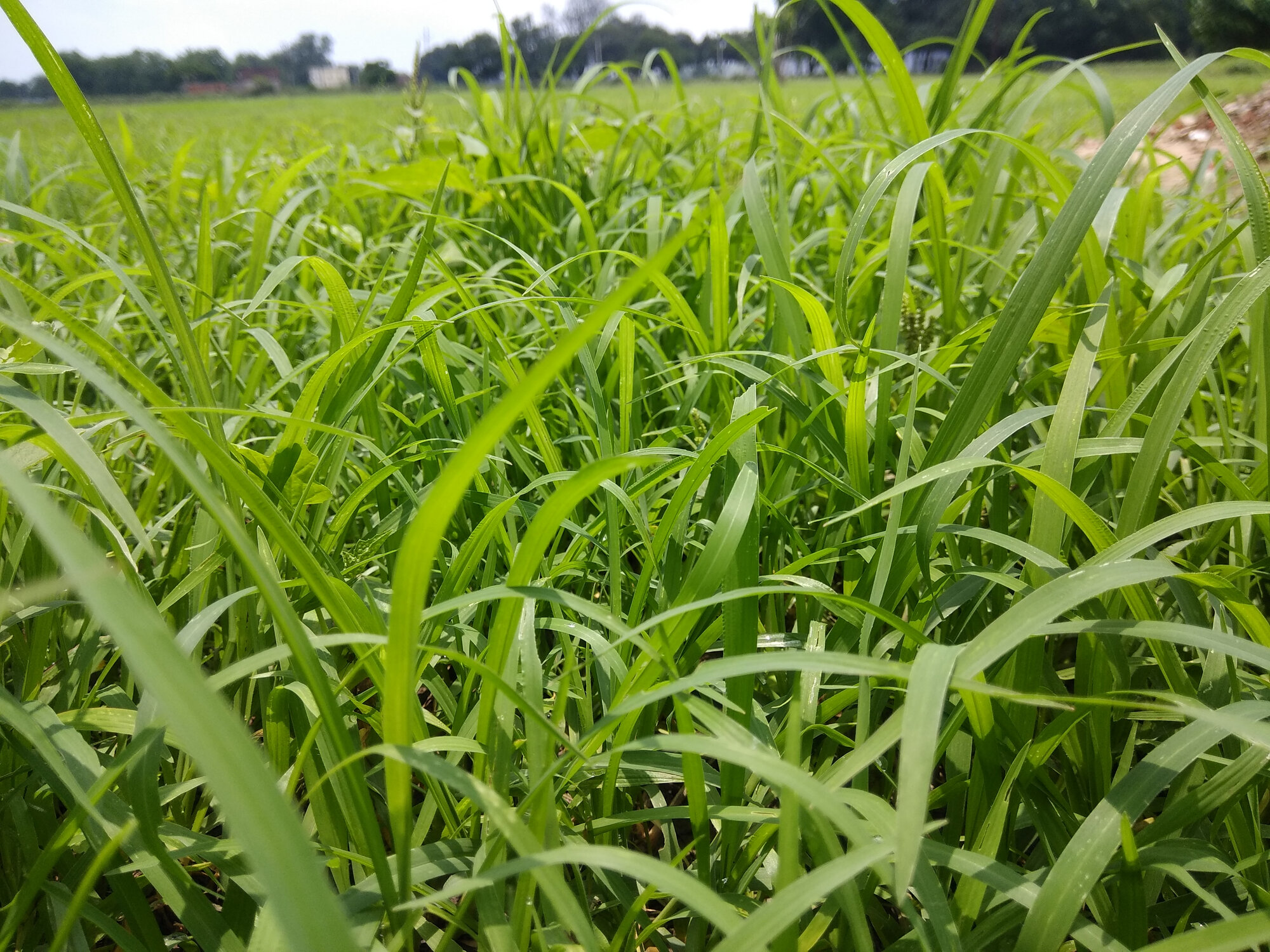
Perennial ryegrass is a perennial, persistent, low-growing grass that forms dense swards. It is used for grazing and hay meadows and is characterized by high yields. High wear tolerance and strong tillering are key qualities. It has awnless spikes. The spikes are arranged in a characteristic S-shaped, zigzag pattern, with one spikelet alternating at each bend and spaced apart from the next (loose spike). Overall, the spike appears flat and slender. Each spikelet consists of 2–10 florets. The flowering period extends from May into autumn. Perennial ryegrass has green to dark-green leaves that are 2–4 mm wide and can reach up to 20 cm in length. The upper leaf surface is ribbed and therefore rough, whereas the underside is smooth and glossy, with a distinct central leaf keel. The grass reaches a height of up to 70 cm. It grows in tufts, produces short stolons, and the base of the shoots is reddish to red-violet. There are many different varieties of perennial ryegrass, including both agricultural and turf types. In agriculture, these varieties are classified according to maturity groups, and there are currently around 300 approved varieties in Germany. In addition to maturity group, varieties are also differentiated according to ploidy. Diploid varieties have a higher sward density, finer leaves, and lower water requirements. Tetraploid varieties, on the other hand, are characterized by more vigorous early development, stronger individual shoots with greater leaf mass, and better ensiling properties
Origin & History
Perennial ryegrass is widely distributed throughout the world as a cultivated, naturalized species. Today, it can be found in Europe, North and South America, Northwest Africa, Asia, Australia, and New Zealand. However, in many of these countries, the grass is considered a neophyte. Originally, it was native to Macaronesia, North Africa, Europe, and Siberia, extending as far as the Himalayas. The fruits, known as caryopses, attached themselves to fur, hooves, clothing, and shoes, allowing them to be carried over long distances and thereby facilitating the plant's spread. Because of this distribution, the name "German ryegrass" can be somewhat confusing; internationally, it is commonly known as "English ryegrass."
Climate & Soil
Perennial ryegrass is considered the most important low-growing grass species on intensively managed grassland sites. The highest yields are achieved under fresh to moist, nutrient-rich conditions, particularly on loamy and clay soils. Lowland areas and coastal regions are especially well suited to its cultivation. Near the coast, the grass remains green even during winter. Perennial ryegrass is less suitable for sites receiving less than 600 mm of annual precipitation. Due to its limited winter hardiness, low temperatures can cause severe damage, which can only be compensated for by overseeding. However, it is extremely robust and highly tolerant of trampling and grazing. It is therefore only moderately suitable for regions with harsh climates and long, cold winters. For peatland sites, special varieties are available that have been tested for suitability on peat soils and are adapted to acidic soils with high moisture levels.
Uses & Yield
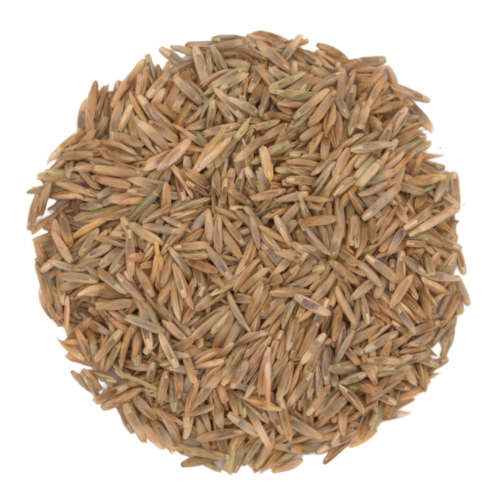
With the highest possible forage value rating of 8, perennial ryegrass is considered a very high-quality forage grass. It is particularly well suited to ruminants, as it is highly digestible and has high energy and protein contents compared with other grazing-tolerant grasses. It is characterized by high sward density and persistence combined with an exceptional ability to regenerate. Its strong competitive ability makes perennial ryegrass particularly well suited for overseeding. Early varieties are especially advantageous in this respect due to their rapid early development. High yields can be achieved under intensive fertilization. Thanks to its high regenerative capacity, perennial ryegrass is particularly suitable for intensively managed areas, such as frequently cut meadows or intensively grazed pastures. Under difficult conditions, it may be beneficial to protect the young plants with a companion crop. Annual ryegrass, for example, can be used as a nurse crop for this purpose. In combination with coated seed technology, reliable emergence can be achieved within approximately one week, provided that average temperatures are sufficiently high. Cutting can be carried out from the end of April to the end of October. The first cut should take place at the end of the main development stage 4 (stage 4 = booting), shortly before ear emergence. The optimum cutting height is 7 cm. With a three-cut management system, forage yield is approximately 80 dt dry matter/ha, while a five-cut management system can produce around 110–120 dt dry matter/ha. In addition to its agricultural use, perennial ryegrass is also one of the most important turf grasses. Because it is robust, hard-wearing, and highly tolerant of foot traffic, it is used in many mixtures for sports and recreational turf as well as for other heavily used grass areas, such as parks, lawns, golf courses, and racetracks. The more intensively the grass is used, the more hard-wearing and traffic-tolerant it becomes. There is also a wide range of varieties available for turf applications, designed to optimize turf quality while keeping maintenance requirements as low as possible.