Spanish flag - Butterfly of the Year 2025
Better save than sorry
Since 2003, the German Environmental and Nature Conservation Association (BUND) and the BUND NRW Nature Conservation Foundation have been holding an annual Butterfly of the Year competition to raise awareness of the importance and threats to this species and to sensitise the public to its protection.
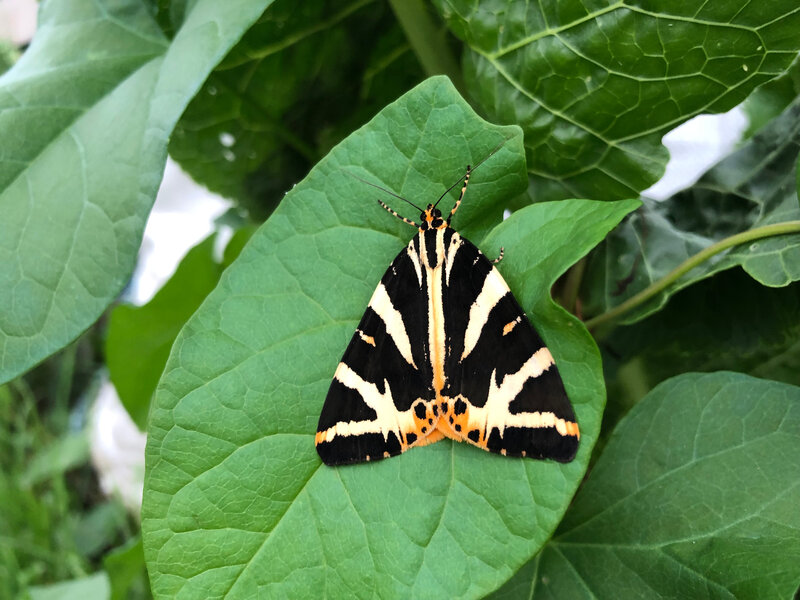
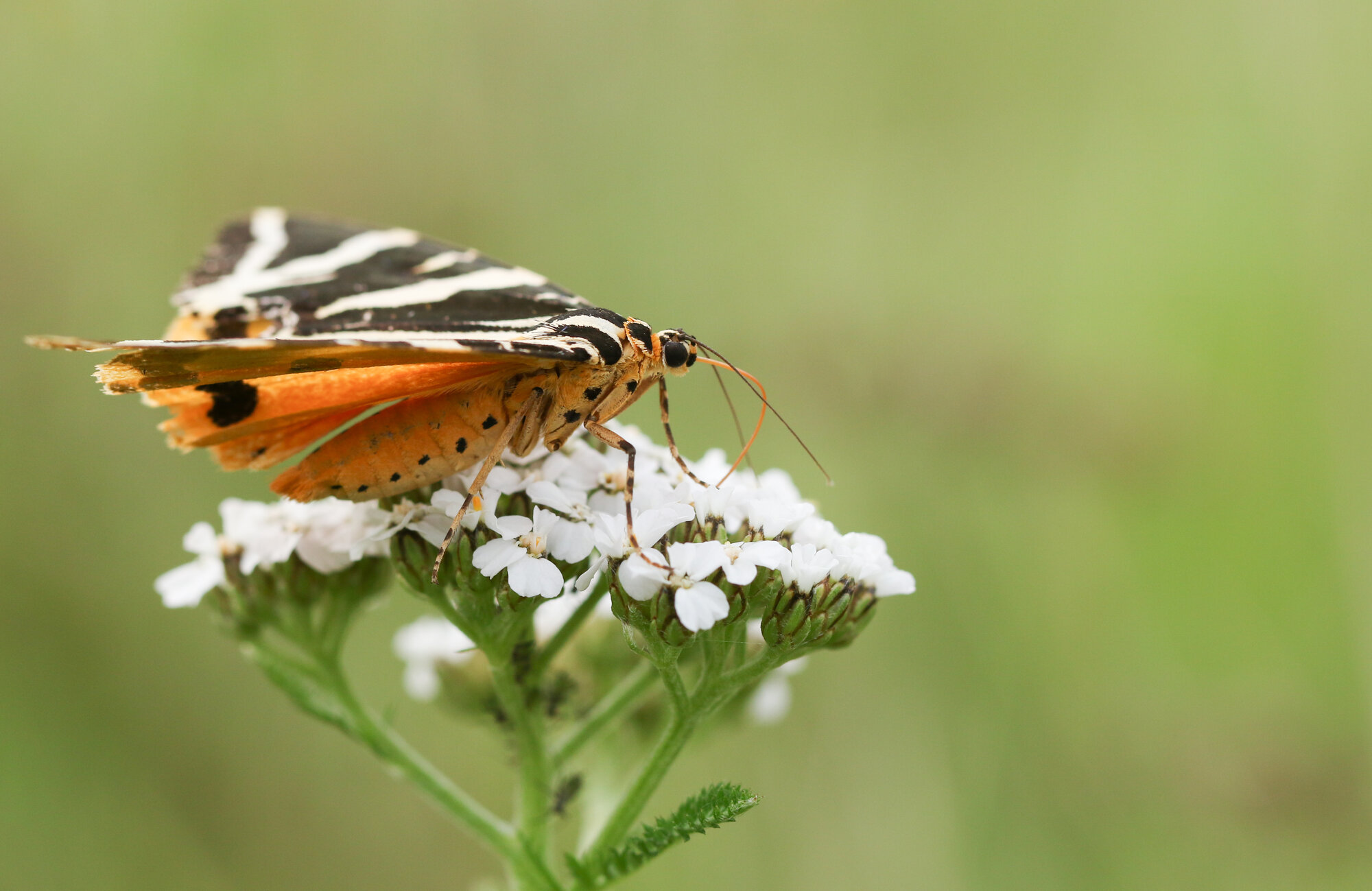
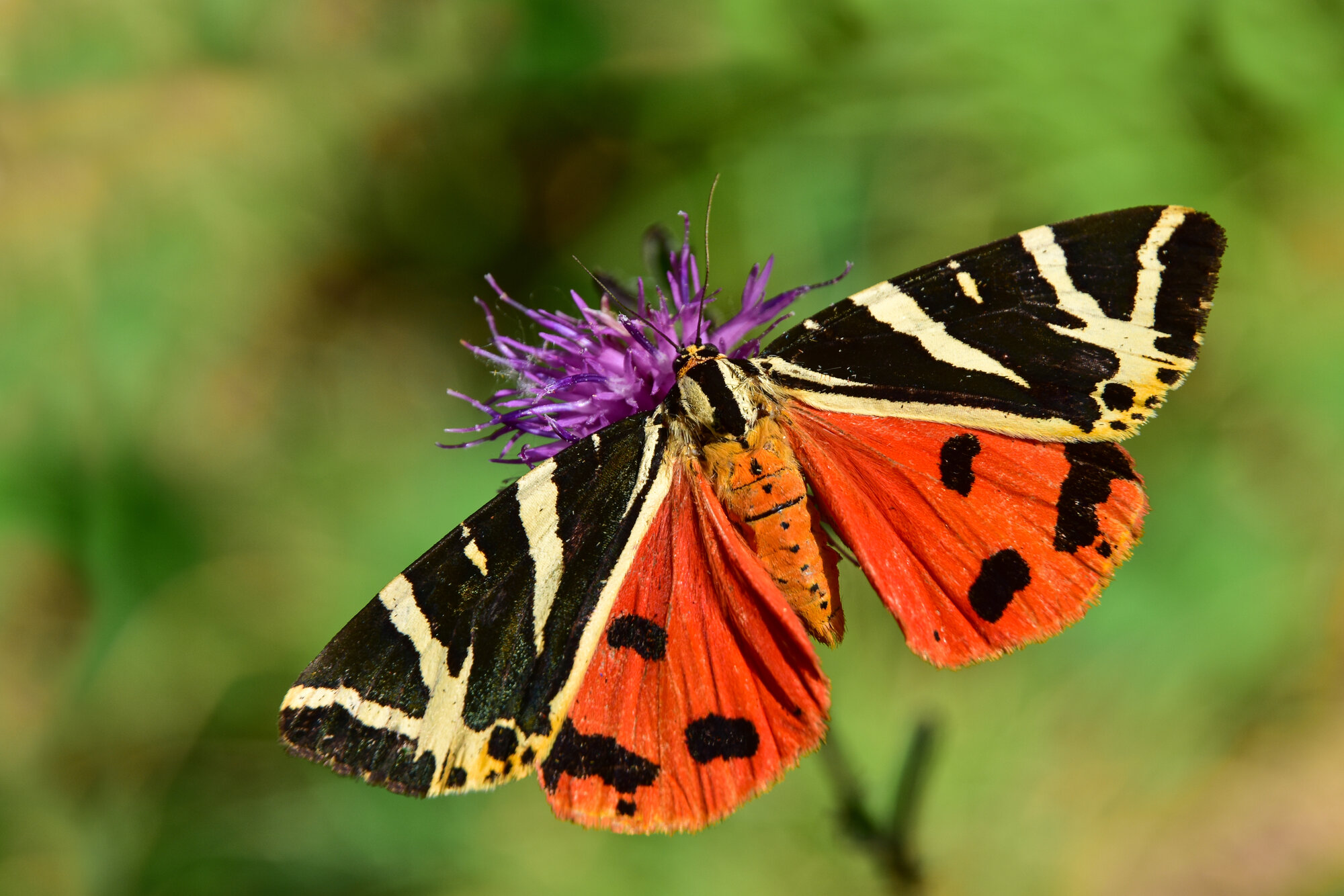
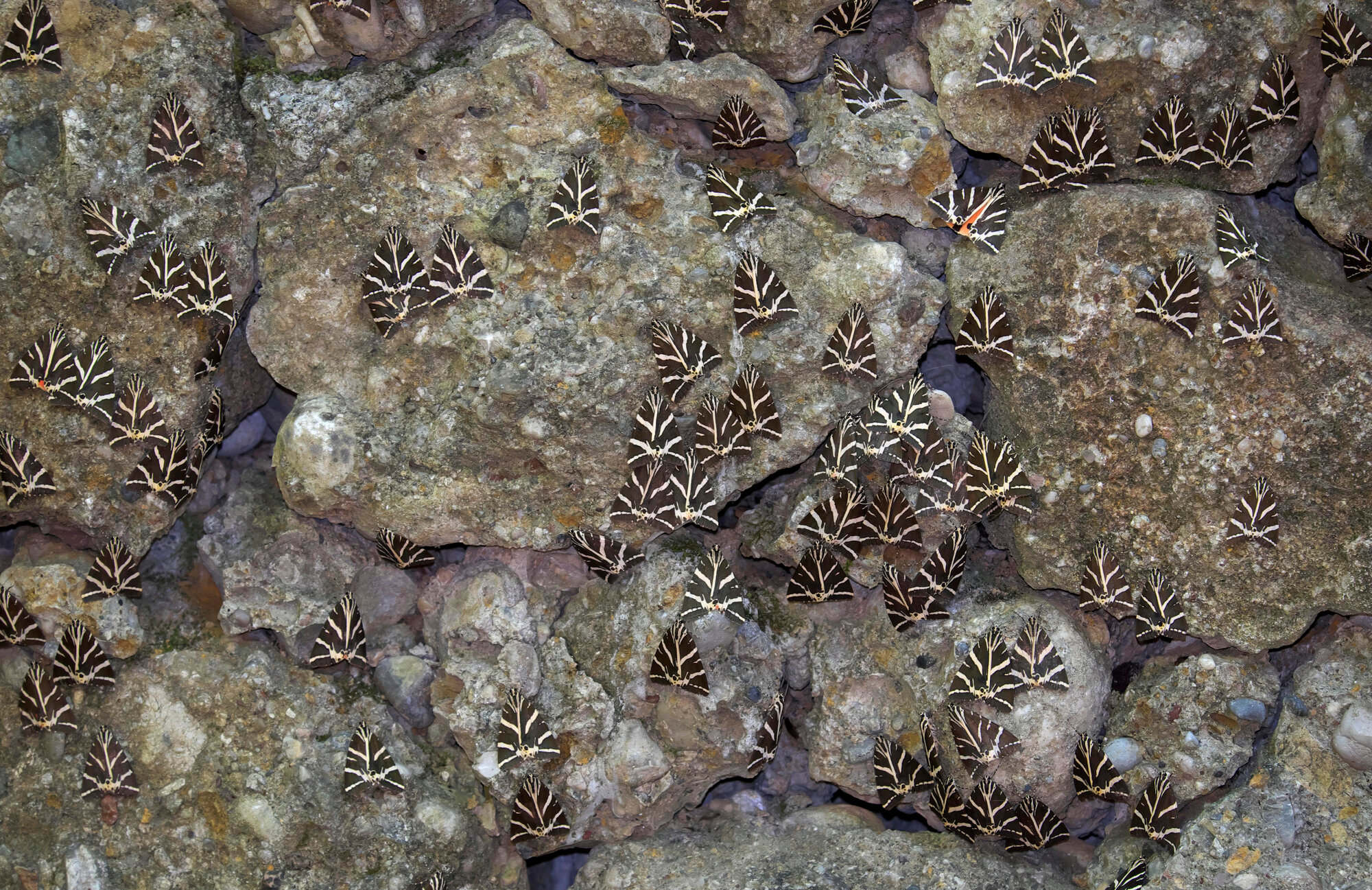
This year, the winner was a moth that is remarkable in several respects. Firstly, the Spanish flag (Euplagia quadripunctaria) is also known by another name, the Russian bear. While its appearance in the butterfly stage gives it the former name, as the colouring of its red and yellow body and the underside of its wings are reminiscent of the national colours, the title ‘bear’ comes from its membership of the bear moth family. This family shares a characteristic hairiness in the caterpillar stage, with a black-coloured body covered with many long tufts of light-coloured hairs.
The Sunny One
The Spanish flag butterfly is one of the few butterfly species that, as a moth, often searches for food during the day. In the sunshine, during its main flight season in August, the butterfly can be easily observed at the edges of forests and riverbanks, along the edges of bushes or in quarries.
However, even it finds the hot midday hours too much and avoids them.
It feeds on nectar using a well-developed proboscis, which is another striking feature of this butterfly and rather unusual among its relatives.
The Spanish flag butterfly's favourite plant is water hyssop, which is also widespread in Germany. With its reddish-purple inflorescences, this plant is particularly inviting, but other flowering plants also attract the butterfly to collect nectar.
Not endangered, but specially protected
It should not be forgotten that there are some negative environmental influences that affect the Spanish flag. Particularly noteworthy here are the increasingly monotonous agricultural landscape, the associated loss of structures in open country and nocturnal light sources. These are often circled until no safe place can be found for their daytime rest and they are exposed to dangers such as spiders and bats.
Unlike the most recently selected specimens, the Butterfly of the Year 2025 has one positive feature, as the Spanish flag is not currently an endangered species. Although it is found on red lists in some regions and is also considered a priority species requiring special protection under the EU's Fauna-Flora-Habitat Directive (FFH), it should be noted that the Spanish flag is spreading across an ever-larger area and its population has not declined significantly.
This butterfly was initially native to southern and central Europe (especially the Greek islands). However, due to climate change and the associated rise in global temperatures, it has increasingly colonised habitats at higher, more northerly locations. It is also spreading more and more in Germany and can now be found from the south, through the central region of Hesse, North Rhine-Westphalia and the Harz Mountains, to Berlin.
These observations from the population can be viewed on various distribution maps and further sightings with photographic evidence can be submitted to Observation.org.