
Chia
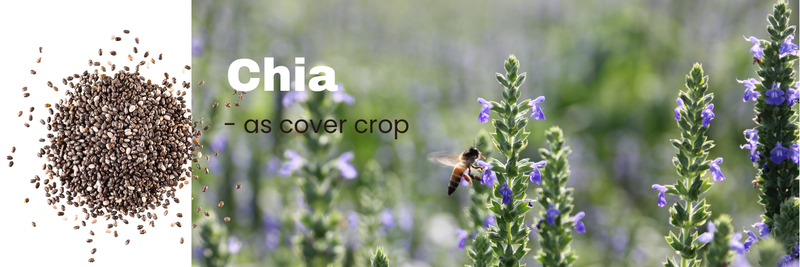
Chia as a catch crop – a flourishing asset for fields and soil
Chia is known to many as a ‘superfood’. Yet the plant can do much more than simply provide high-quality seeds. As a catch crop, chia offers valuable properties for modern crop rotations, promotes biodiversity and supports soil health. It is becoming increasingly important, particularly within regenerative farming systems.
Why use chia as a catch crop?
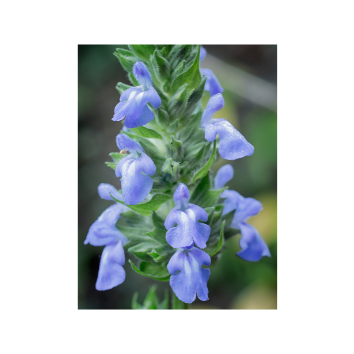
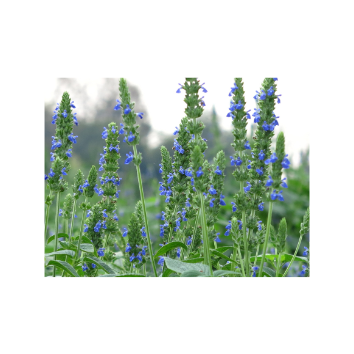
Here at Feldsaaten Freudenberger, we see chia as an exciting addition to a wide range of green cover concepts. This annual plant from the Lamiaceae family grows upright, produces numerous blue flowers and develops a vigorous above-ground biomass. This makes it not only visually attractive but also agronomically interesting.
The benefits at a glance
• Attractive flowering plant: The blue flowers provide bees and other pollinators with a valuable food source in late summer.
• Promotion of biodiversity: Chia increases species diversity in the field and enriches flower mixtures.
• Soil cover: The crop protects the soil from erosion and drying out.
• Humus formation: After the green manure phase, the crop can be mulched or rolled, thereby helping to improve soil structure and promote humus formation.
• Interesting crop rotation: As chia is hardly related to our native arable crops, it is well suited to expanding crop rotation and can reduce disease and pest pressure in the subsequent crop.
Undemanding – with few requirements
Chia prefers warm locations and is not frost-hardy. Therefore, sowing should only take place once night-time frosts are no longer expected. Warm soil temperatures are important for reliable germination.
The plant grows reliably in many soil types, but thrives particularly well in lighter sandy, sandy loam or sandy clay soils. Waterlogging should be avoided.
Sowing made easy
For use as a catch crop, we recommend:
• Sowing: from the end of May
• Seed rate: around 6–7 kg/ha (approx. 450 seeds/m²)
• Sowing depth: approx. 1 cm
• Row spacing: 30–50 cm
A fine, crumbly seedbed that has been well compacted is crucial for good field emergence. Often, an optimally prepared seedbed is more important than sowing as early as possible.
A hardy crop requiring minimal plant protection
Another advantage: chia is considered a hardy and comparatively undemanding crop. Diseases and pests have so far played only a minor role.
Leaf rot may occur only if leaves remain wet for prolonged periods. With wider row spacing, weeds can also be effectively controlled mechanically, for example by hoeing.
A boon for regenerative agriculture
More and more farms are turning to catch crops to maintain the long-term productivity of their soil. Chia fits perfectly into this approach:
• protects the soil from wind and water erosion,
• promotes soil life,
• provides organic matter for humus formation,
• improves soil structure and
• supports insects during flowering.
Chia is particularly well suited to diverse cover crop mixtures, where it can really show off its strengths.
More than just a catch crop
As well as being used for green cover, chia is known worldwide primarily for its seeds. These contain valuable omega-3 fatty acids, high-quality plant protein and numerous minerals and vitamins. For catch crop cultivation, however, the focus is not on the seed harvest but on the plant’s contribution to healthy and living soil.
Our conclusion
Chia combines biodiversity, soil protection and attractive flowering in a single crop. Anyone wishing to expand their crop rotation whilst also benefiting the soil and insects will find chia an interesting alternative for modern green cover systems.
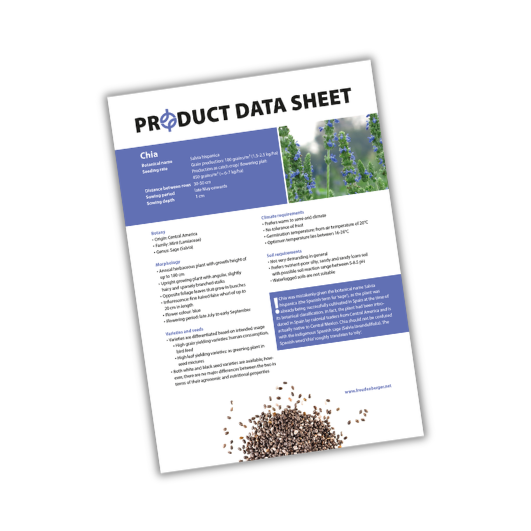
Would you like to find out more about chia?
In the product data sheet from Feldsaaten Freudenberger, you’ll find an overview of all the key information on sowing, seed rate, site requirements, fertilisation and use.