
The European turtle dove: Bird of the year 2020

Turtle doves are a symbol of love, happiness, and peace. The term is also commonly used to describe a couple who are newly in love.
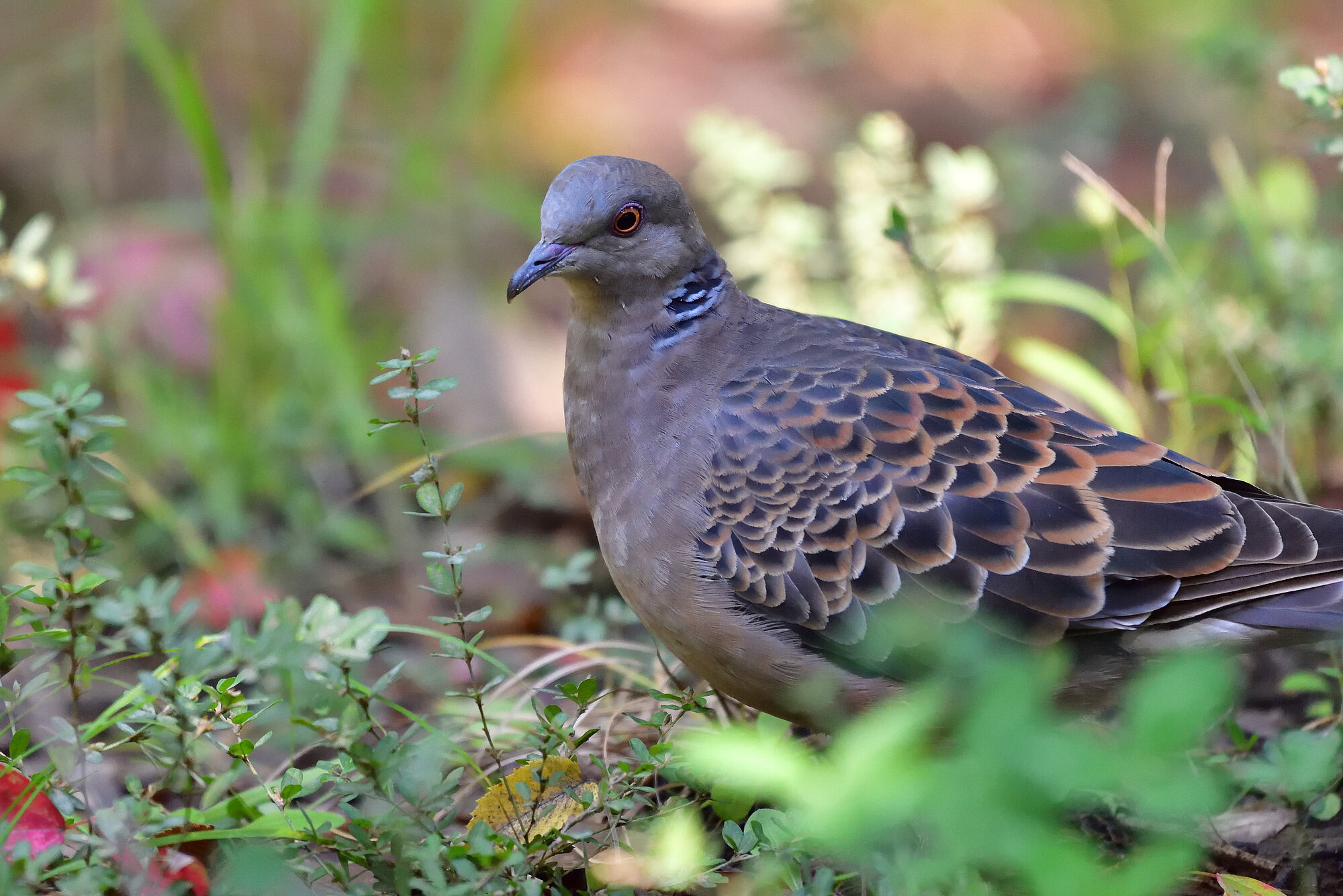
Symbol of love, happiness and peace
The turtle dove was chosen as Bird of the Year 2020 by NABU (Nature and Biodiversity Conservation Union) and LBV (State Association for Bird Protection in Bavaria). The small dove is one of around 300 species of dove found worldwide, only six of which are native to Germany.
Turtle doves have colorful, almost exotic-looking plumage, with males and females being barely distinguishable in appearance.
Among the doves of Central Europe, turtle doves are the only long-distance migrants. Between late April and mid-May, they return to Europe and their breeding grounds, where they begin their courtship. Once a pair has formed, they build a shallow nest from twigs in bushes. During the breeding season, females generally lay two eggs per clutch, up to twice a year. The pair remains faithful to each other throughout the entire period, until the turtle doves leave Europe between late July and early October to spend the winter in a dry belt south of the Sahara with sparse vegetation. The acacia woodlands found there provide suitable conditions for the doves to overwinter. In spring, the turtle doves embark on their long journey back to Europe and their breeding grounds.
The vegan among doves
The diet of turtle doves is almost entirely plant-based. They forage in groups along field margins and in forest clearings, where they particularly favor tree and wildflower seeds, such as those of clover, campion, and vetch.
However, these very plants are often unwelcome in agricultural fields and are removed by farmers. As a result, the seeds are no longer available to turtle doves as a natural food source. With wild plants becoming increasingly scarce, seeds from agricultural crops now account for more than half of the doves’ diet.

Fewer and fewer habitats
Unfortunately, the population trend of the turtle dove in recent years has been far less positive than its symbolic significance. The species is now classified as globally threatened and is listed on the worldwide Red List.
Above all, living conditions for turtle doves have deteriorated significantly in recent years. Increasingly intensive agriculture and the resulting expansion of cultivated areas have led to a substantial decline in the diverse field and meadow margins, fallow land, and small bodies of water that are important to turtle doves. As a result, nesting sites, feeding areas, and drinking places have also become increasingly scarce. The lack of food sources and suitable nesting sites are considered the main reasons for the decline in breeding success and the lower survival rate of young birds.
Turtle doves face similar problems in their wintering grounds, where uncontrolled deforestation is destroying habitats and water sources are drying up due to a lack of rainfall along their migration route and in the Sahara.
In addition, turtle doves are seriously threatened by both legal and illegal hunting. More than 2 million turtle doves are killed in the EU alone every year.
According to NABU, the turtle dove population in Germany has declined dramatically over the past 40 years, with only around 10 percent of the former population remaining today. In numbers, this means that only around 12,500 to 22,000 breeding pairs remain in Germany, compared with approximately 5.9 million in Europe as a whole. Most of Europe’s turtle doves are found in France, Italy, Spain, and Romania. The situation is even worse in the United Kingdom, where the turtle dove population has declined by as much as 94 percent.