
How and when the lawn will turn green again
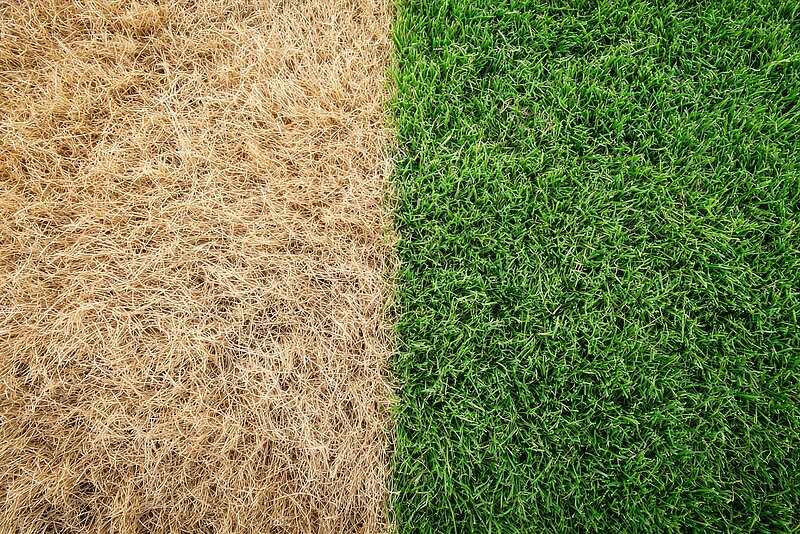
What can be done with drought-damaged lawns, and how should they be managed? Anyone currently spending time in parks and gardens and looking at the lawns will often find nothing but yellowish-brown areas with severely dried-out grass. Unwatered lawns, particularly those on poor soils, are especially affected. Faced with the bleak sight of these dry, parched areas, many people are asking themselves: Can the lawn still be saved? We are looking for answers.
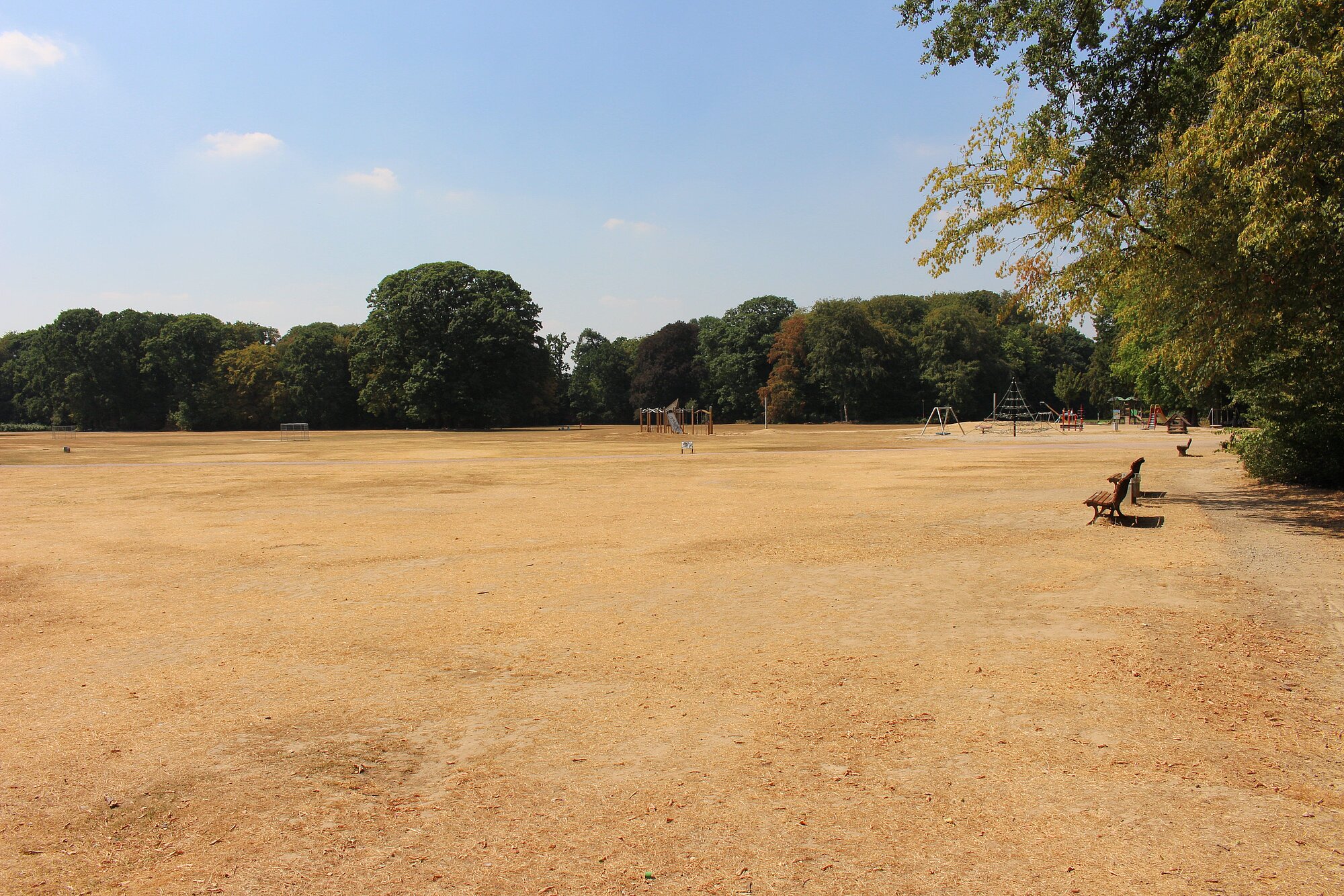
Brown, But Not Dead: How Lawns Survive Summer Drought
Parched, steppe-like lawns are not only unsightly; in many cases, they have also lost their function as ornamental landscaping, sports and play areas, and spaces for leisure and recreation. After all, who would want to spread out a beach towel on rough, prickly-looking, brown tufts of grass?
Yet what looks bleak, dusty, and dead is in many cases still alive beneath the surface. Many grass species used in lawns in cultivated and improved forms originate from the vast steppe regions of Central Asia. Summers there have always been hot and dry. To survive successfully in these regions, grasses needed to develop specific adaptation mechanisms. Drying out during the summer and turning brown above ground—known as summer dormancy—has long been, and remains, an essential part of this survival strategy.
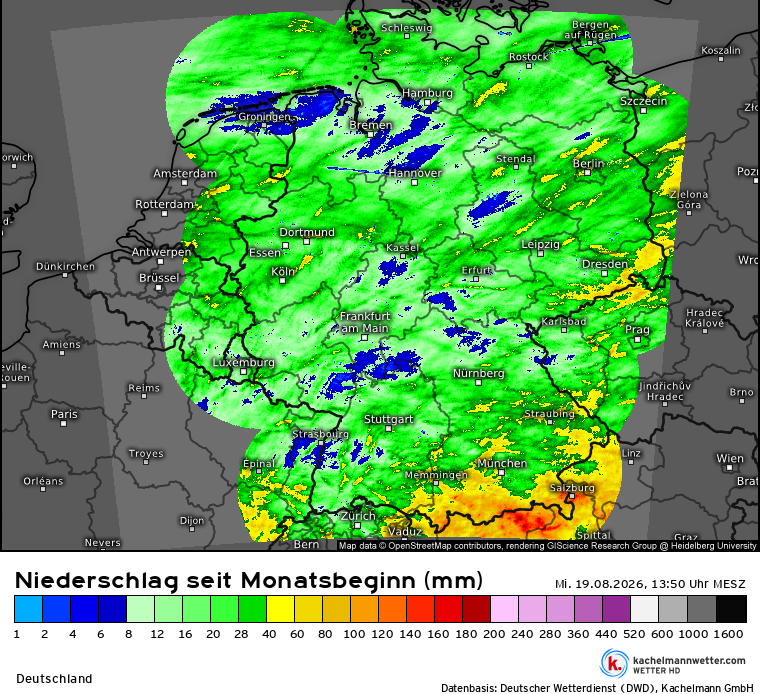
Relief After the Drought – The Impact of the Rainfall Received So Far
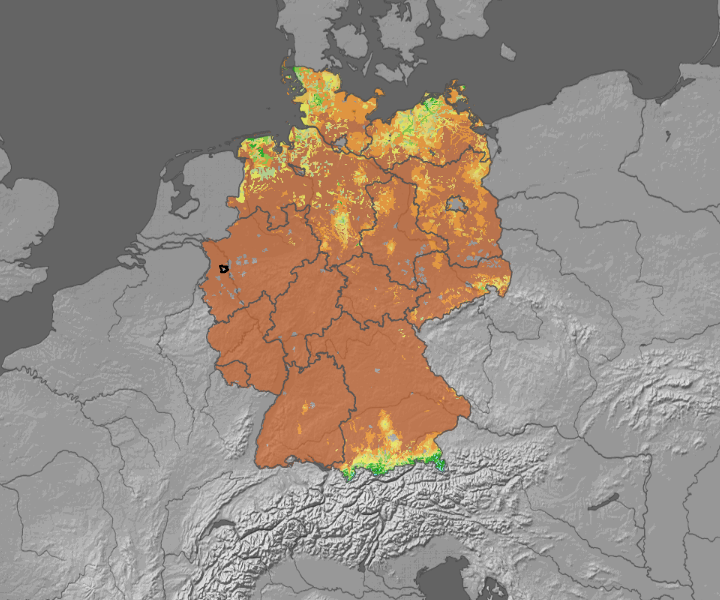
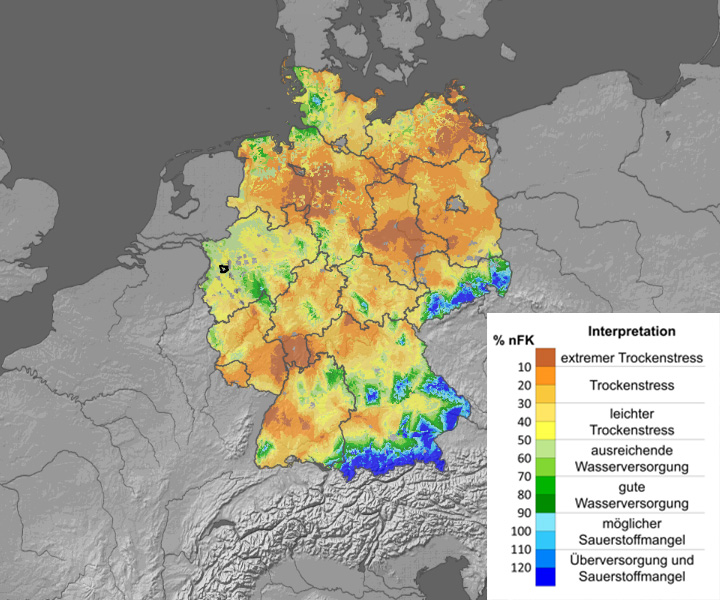
The effects of the rainfall that has now occurred during the second half of August are becoming increasingly visible, as shown in the following two figures. A clear change in colour can be observed from Figure 02—where almost everything is brown—to Figure 03, where the first regions have returned to yellowish-green shades. This change in colour indicates that the grasses are once again able to make better use of the available soil water, thanks to the recent rainfall (Source: DWD Soil Moisture Viewer 2026).
After the Drought – Time for Overseeding?
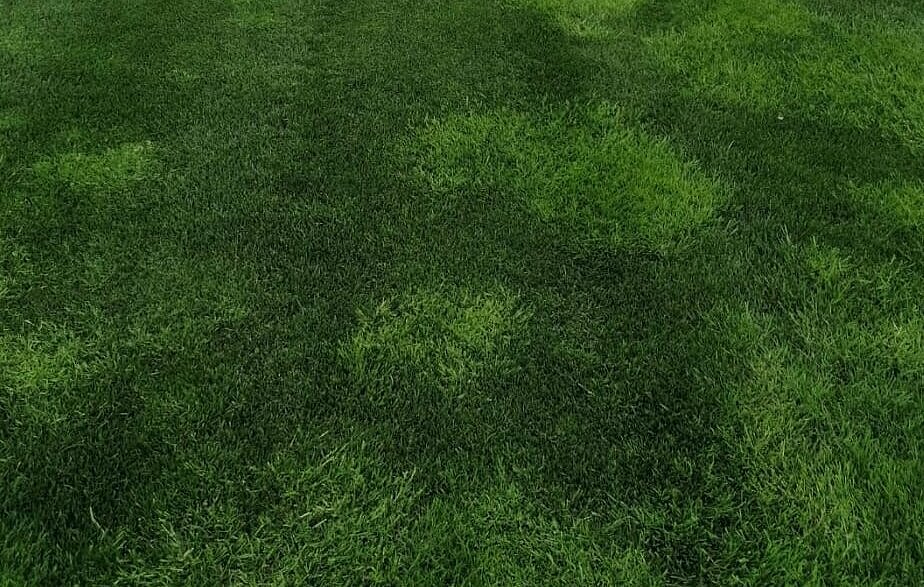
Where rainfall has already eased the acute drought conditions, the time has come to take action and help your lawn recover more effectively and quickly. If you do nothing and simply wait, your lawn will turn green again within 7 to 14 days—but it will not necessarily recover in the way you want it to. The proportion of desirable lawn grasses will decrease, while the proportion of unwanted grasses and weeds will generally increase. And that not all shades of green are created equal becomes obvious at the latest when you look at the following image.
Unwanted grasses such as annual bluegrass (Poa annua) and rough bluegrass (Poa trivialis) are usually noticeable in lawns not only because of their quickly appearing seedheads, but also because of their consistently light-green colour. By contrast, most cultivated lawn grass varieties have a medium-green or even dark-green colour. The darker the green of the variety, the more quickly and clearly unwanted grasses stand out.
Guide to Repairing and Renovating Your Drought-Damaged Lawn
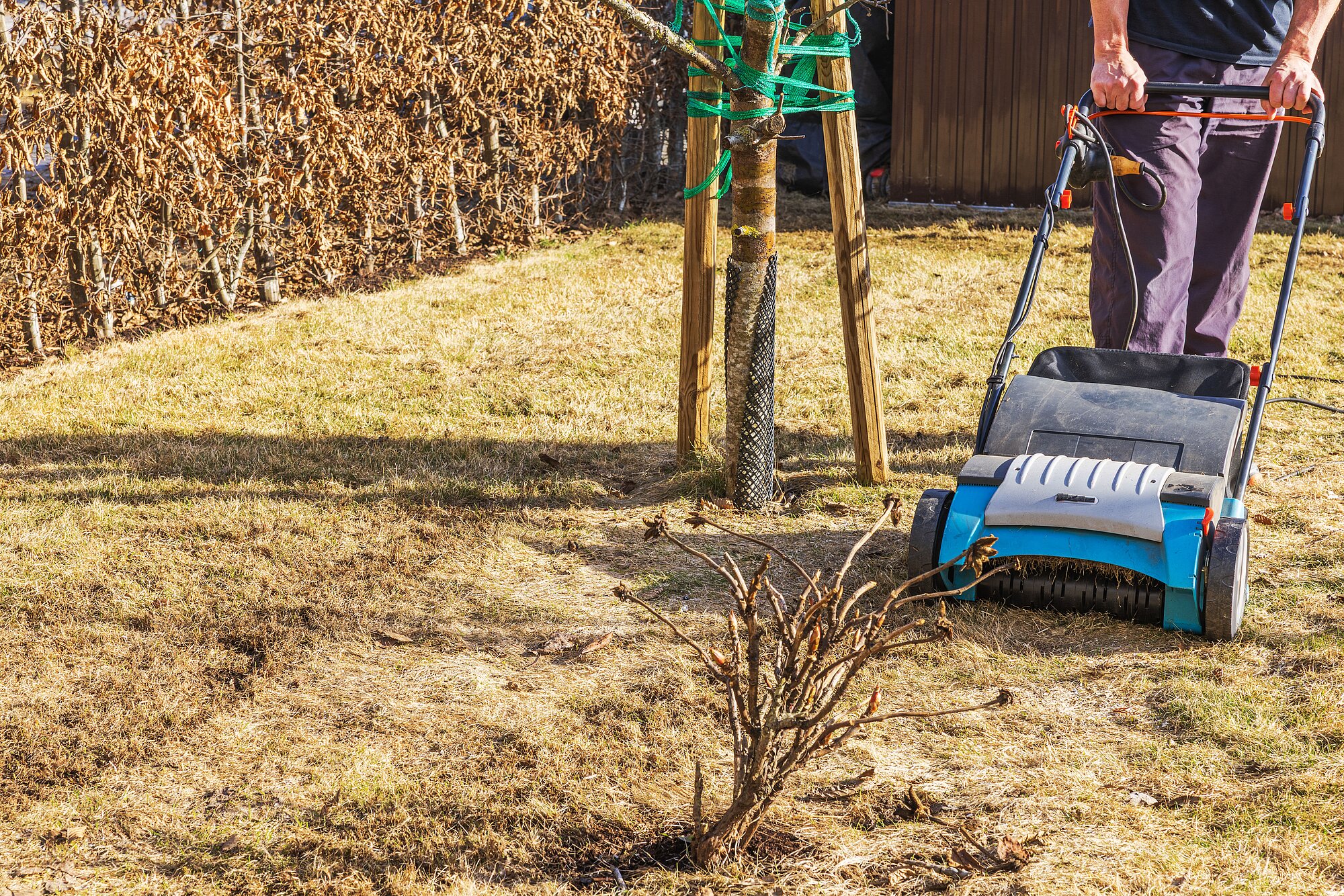
If you want to use the beginning of late summer to give your drought-damaged lawn a helping hand, the best approach is as follows:
First, remove dead and brown plant material by mowing the lawn short. It is important to properly dispose of the clippings, either in the organic waste bin or through a good composting system. This creates space for subsequent overseeding and makes the remaining turf easier to work with.
The area should then be thoroughly scarified in both directions, lengthwise and crosswise. Again, remove any dead material and thatch. Scarification opens up and aerates the existing turf, allowing the seed to make better contact with the soil during subsequent overseeding. This is essential for successful germination and initial root development.
For conventional overseeding, mixtures containing diploid varieties of perennial ryegrass (Lolium perenne) are particularly suitable. This species establishes relatively quickly and is therefore frequently used in overseeding mixtures. With Greenfield Reseeding-Coated Seed or Loretta Lawn Repair, for example, you have access to mixtures consisting exclusively of various high-quality perennial ryegrass varieties, specifically designed to close gaps and rejuvenate existing lawns.
After sowing, the area should be watered briefly. This improves contact between the seed and the soil and prevents the relatively lightweight seeds from being blown away by the wind. The overseeded area must be kept sufficiently moist until germination. If natural rainfall is insufficient, additional irrigation will therefore be necessary.
When carrying out subsequent mowing, remember to increase the cutting height to 3–4 cm, particularly with autumn approaching. An autumn fertiliser with a higher potassium content should also be applied by the beginning of October.
Does a Lawn Always Have to Be Intensively Maintained and Lush Green?
Regenerating a drought-damaged lawn also provides an opportunity to consider how the area should be used in the future. A dense, closely mown, year-round green lawn is attractive, but it requires appropriate maintenance. Particularly as summers become increasingly dry, water availability is a crucial factor.
This raises a fundamental question: Does the entire existing lawn area really need to be intensively maintained all year round?
Depending on how the area is used, a more extensive approach can be a viable alternative. Such areas do not have to look neglected or simply be left to develop naturally. By deliberately selecting suitable seed mixtures, it is possible to establish a resilient stand that requires less maintenance while also providing greater ecological value.
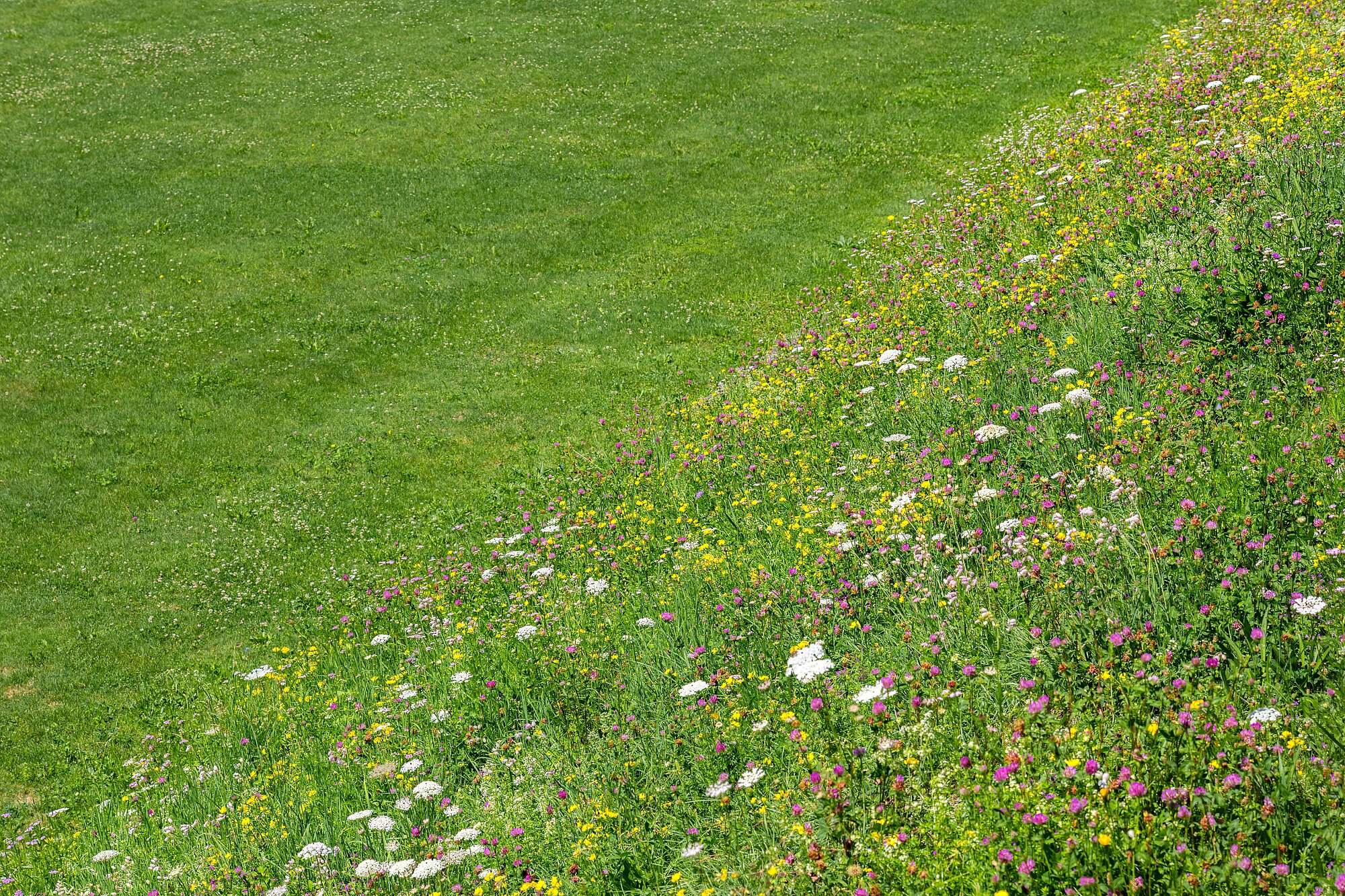
The Multi-Zone Lawn as a Compromise?
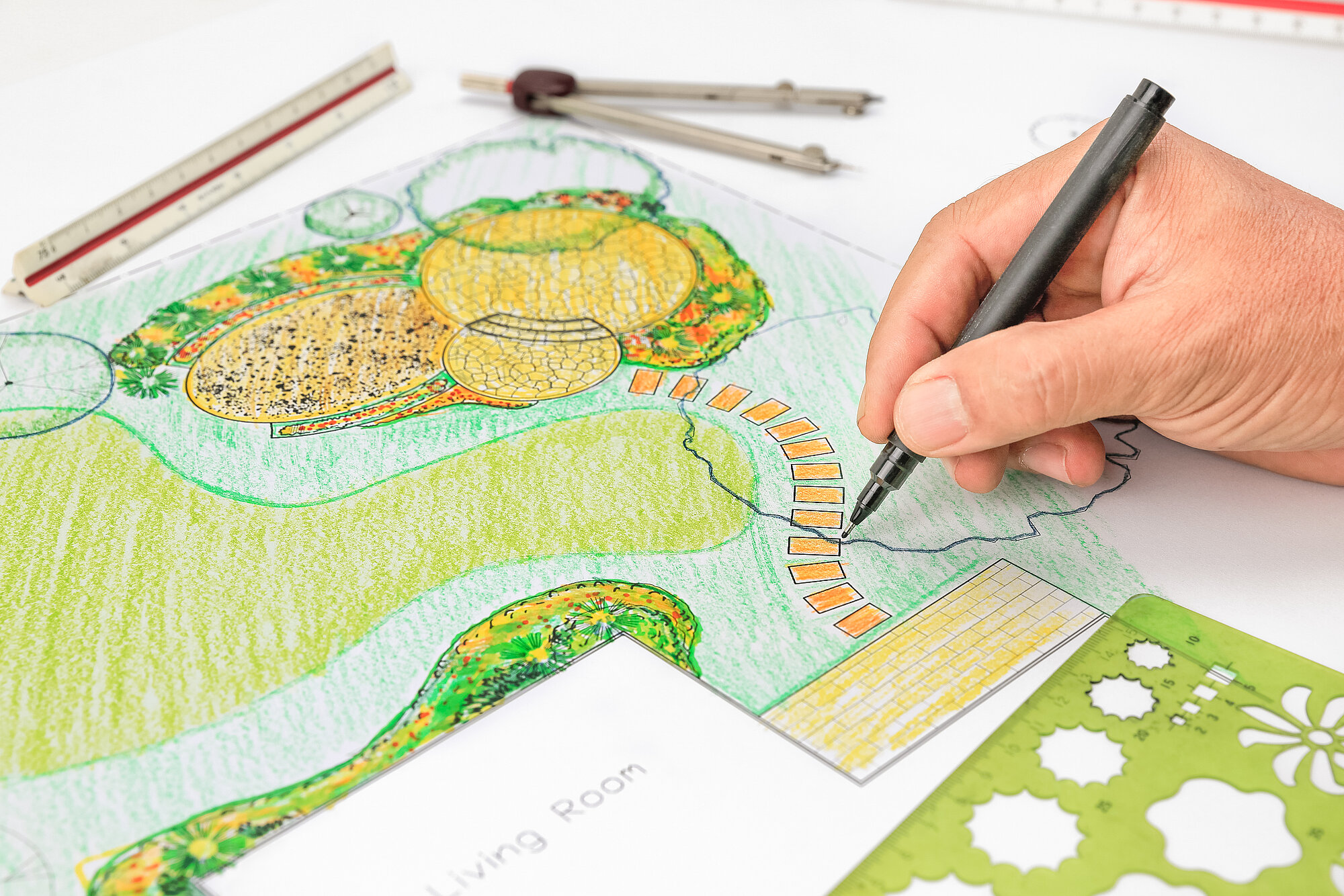
However, choosing between an intensively maintained lawn and an extensive green space does not have to be an either-or decision. Particularly for larger properties, a so-called multi-zone lawn can be an attractive solution.
The area can be divided according to its actual use. A smaller section immediately around the terrace or house can continue to be intensively maintained. Wherever sun loungers are placed, children play, or a uniform lawn appearance is desired, a conventional utility or ornamental lawn can be established.
For representative areas, for example, Greenfield 110 Ornamental Lawn is a suitable choice. If the central area is likely to experience heavier use, such as for playing and relaxing, Greenfield 230 Recreational Lawn – Sports & Play Lawn provides a more robust alternative.
A larger area can then extend beyond this, with less intensive use and correspondingly more extensive maintenance. This area can be allowed to grow taller and requires less frequent maintenance.
Which Mixture Suits Which Character?
The choice of seed mixture for the more extensive areas depends on how the area is intended to look and be used in the future.
For those who still want a clearly lawn-like appearance, but would like to combine it with herbs and flowers, Greenfield 240 Utility Lawn – Herb Lawn is one option. Low-growing herbs and meadow flowers complement the lawn grasses. With around four to eight cuts per year, the maintenance requirements are significantly lower than those of an intensively maintained lawn.
For particularly dry and lightly used areas, Greenfield 722 Landscape Lawn – Dry Sites with Herbs can provide an alternative. This mixture was developed for extensive areas in dry locations and combines suitable grasses with herbs and clover species. Requiring only a few cuts per year, it is particularly suitable for areas where low maintenance requirements are the priority.
If, on the other hand, the outer area is deliberately intended to be colourful and rich in flowers, the Greenfield Flower Meadow is an ideal choice. This perennial mixture combines grasses with a wide variety of different flowering plants and herb species. In addition to its visual appeal, it also provides an additional food source for pollinators such as bees and butterflies.
In this way, a larger garden area can be developed in stages: from an intensively maintained and actively used central area, through a more extensive herb or landscape lawn, to a flower-rich outer zone. The individual areas differ in appearance, use and maintenance intensity, yet together they form a cohesive overall concept.