Flower of the year 2020: Bogbean
Neither clover nor fever-reducing
Bogbean, also known as buckbean (Menyanthes trifoliata), is neither related to clover, despite its clover-like leaves, nor can it reduce fever, contrary to what was once believed and practiced. Its Gernan name “Fieberklee” is therefore highly misleading.
It has to be wet
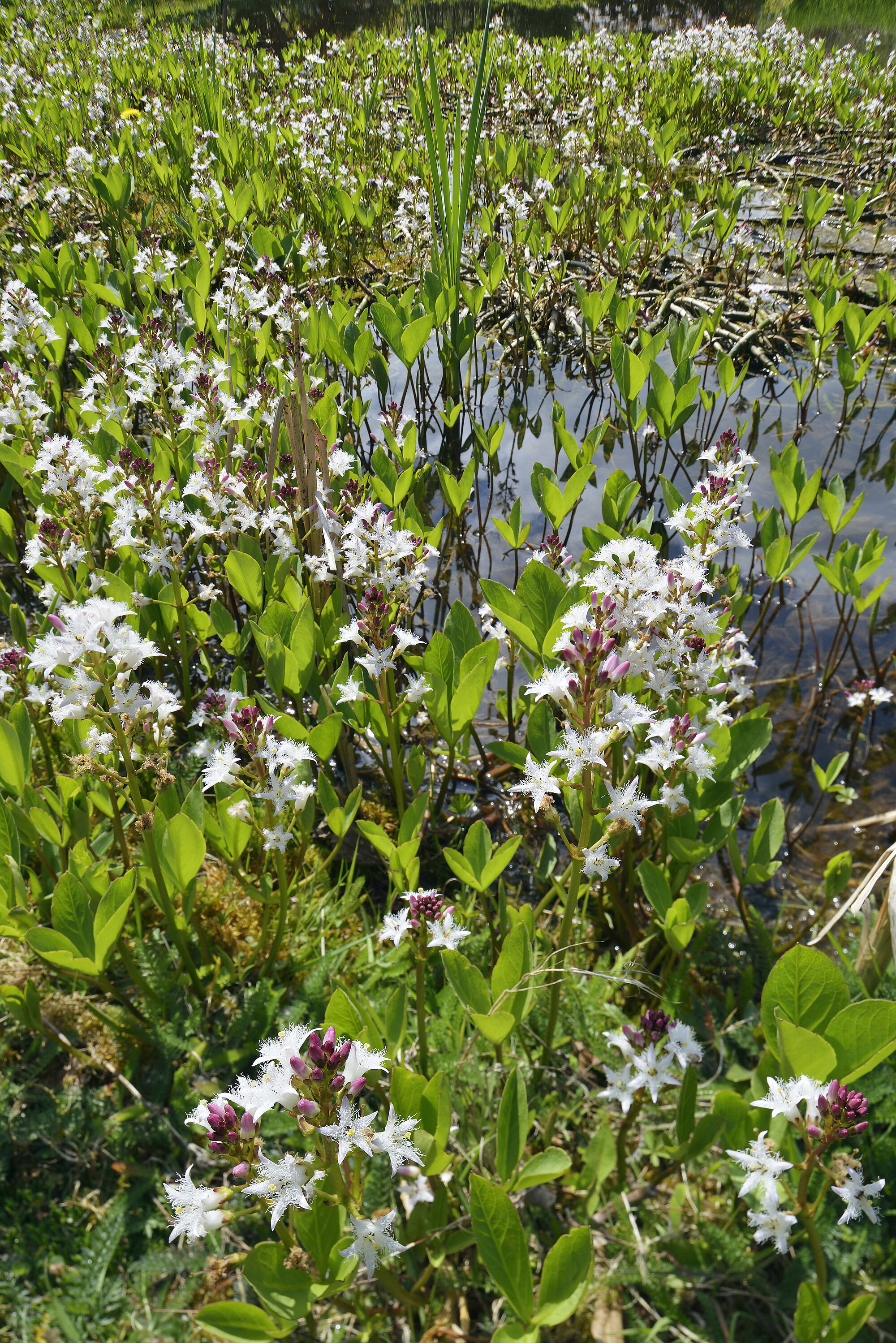
Growing to a height of 15–30 cm, bogbean is a perennial marsh and waterside plant found mainly in the Northern Hemisphere. It thrives in wet meadows, bogs and marshes, as well as in shallow garden ponds and along shorelines, where conditions are ideal. Bogbean prefers low-calcium, permanently moist to waterlogged soils. As a marsh plant, it is one of the early colonizers of the marginal zones of transition mires, thereby paving the way for other plants.
An attractive source of food for insects
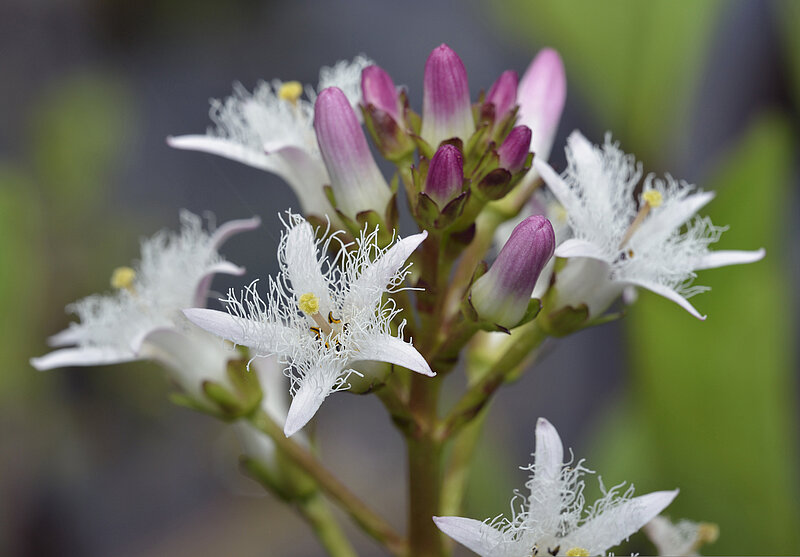
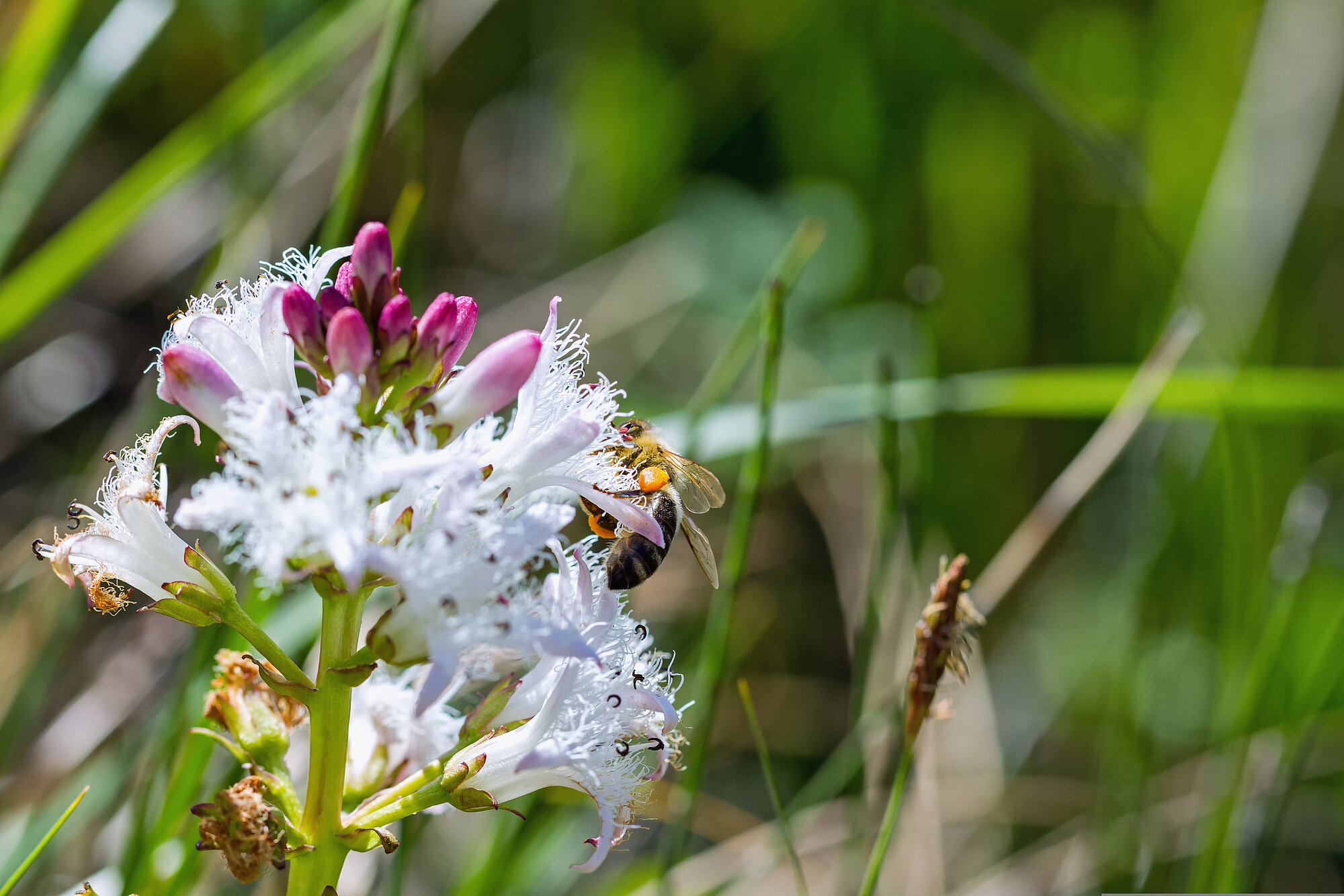
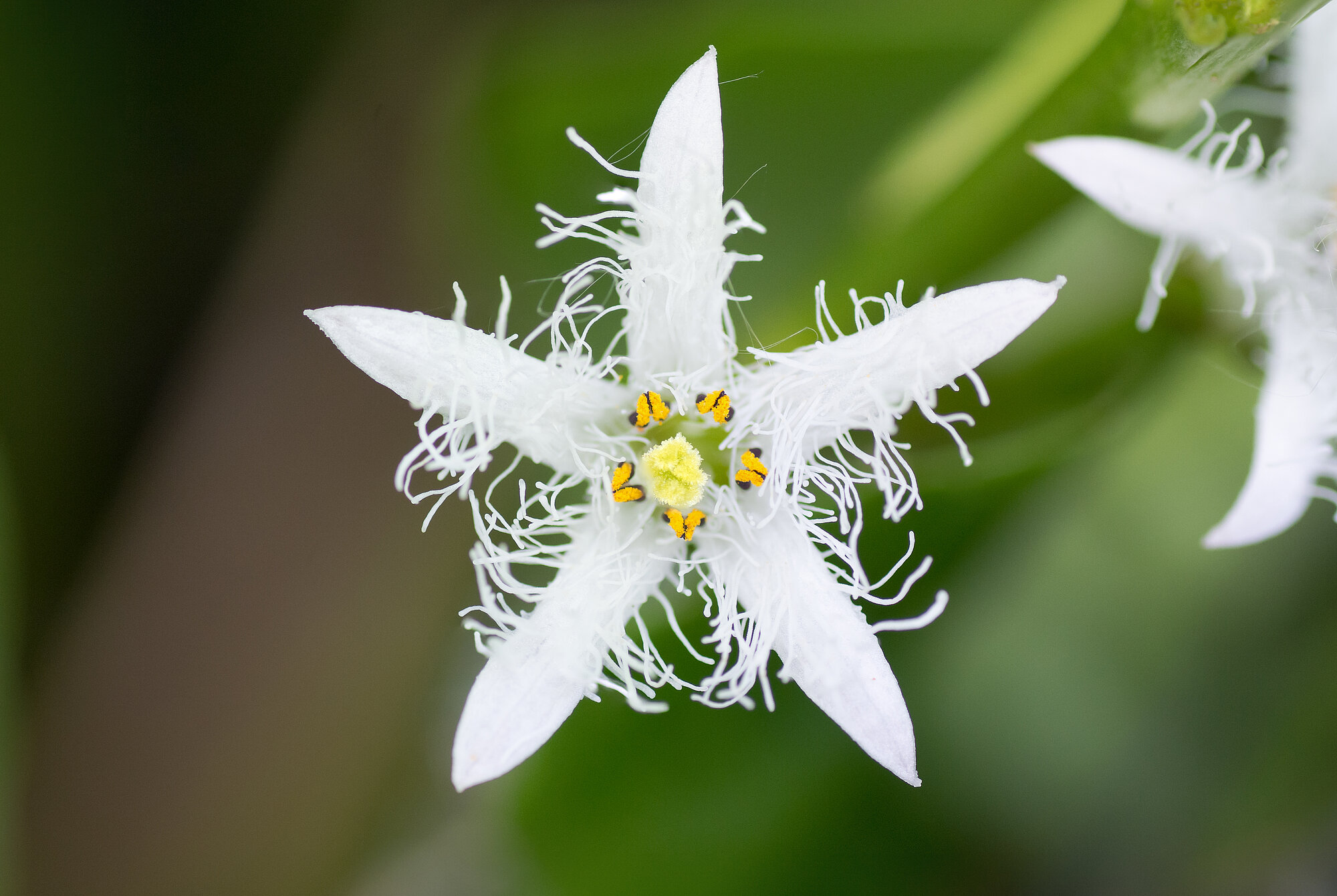
As an aquatic plant, bogbean is perfectly adapted to the conditions found in wetlands. It has particularly fine roots, while its hollow leaf stalks and stems provide buoyancy, preventing the plant from sinking in the water. They also help supply the submerged parts of the plant with oxygen. The green leaves of bogbean are elongated to oval in shape. Its delicate white, star-shaped flowers grow in upright clusters. The edges of the petals are slightly fringed and covered with fine cilia, giving bogbean its distinctive appearance. During its flowering period, from late April to June, the white, star-shaped flowers attract bees and bumblebees in search of food.
Fewer and fewer natural habitats
Bogbean is now protected by law and is included on the list of threatened plants. As more and more wetlands and mire areas have been drained in recent years, many of the plant’s natural habitats have been lost. Bogbean is therefore considered a threatened species in Germany.
* The Loki Schmidt Foundation is a foundation dedicated to nature conservation in Hamburg and to the protection of endangered plants. Its aim is to promote the protection of nature and landscapes, as well as environmental education. The “Flower of the Year” campaign was launched in 1980 by Loki Schmidt (who died in 2010 and was the wife of former German Chancellor Helmut Schmidt). Through this campaign, she sought to draw attention to wild plants threatened with extinction.