
Field larkspur – Flower of the year 2026
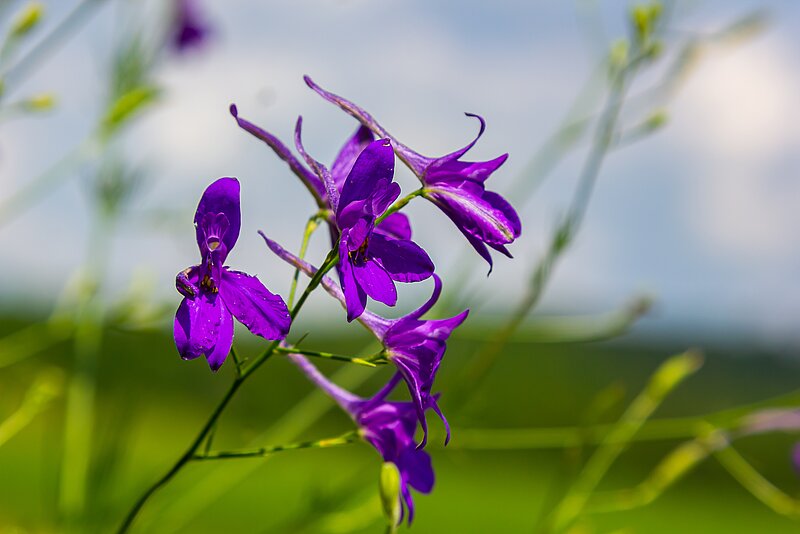
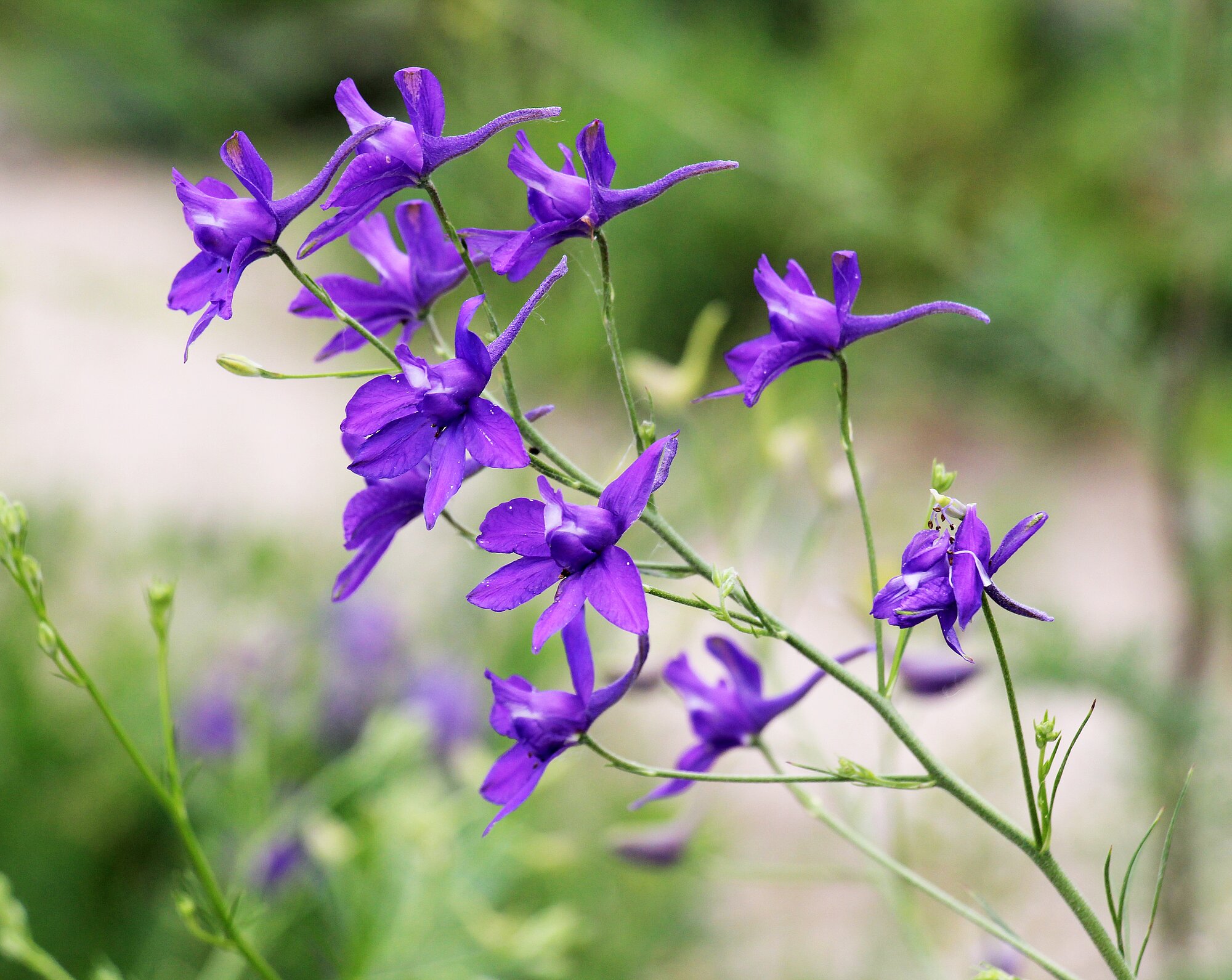
A striking blue beauty
Field larkspur (Consolida regalis), also known as corn larkspur, has been chosen by the Loki Schmidt Foundation as the Flower of the year 2026. This annual herbaceous plant belongs to the buttercup family (Ranunculaceae) and is one of Europe’s characteristic arable weeds. Its name refers to the flower’s long, backward-pointing spur, which resembles the spur of a knight’s boot.
Field larkspur develops a delicate, highly branched stem that grows to between 20 and 40 cm in height, with finely divided, almost thread-like leaves. From May to September, it produces bright blue-violet flowers, loosely arranged in small clusters at the ends of the shoots. Like many members of the buttercup family, the plant is poisonous in all parts.
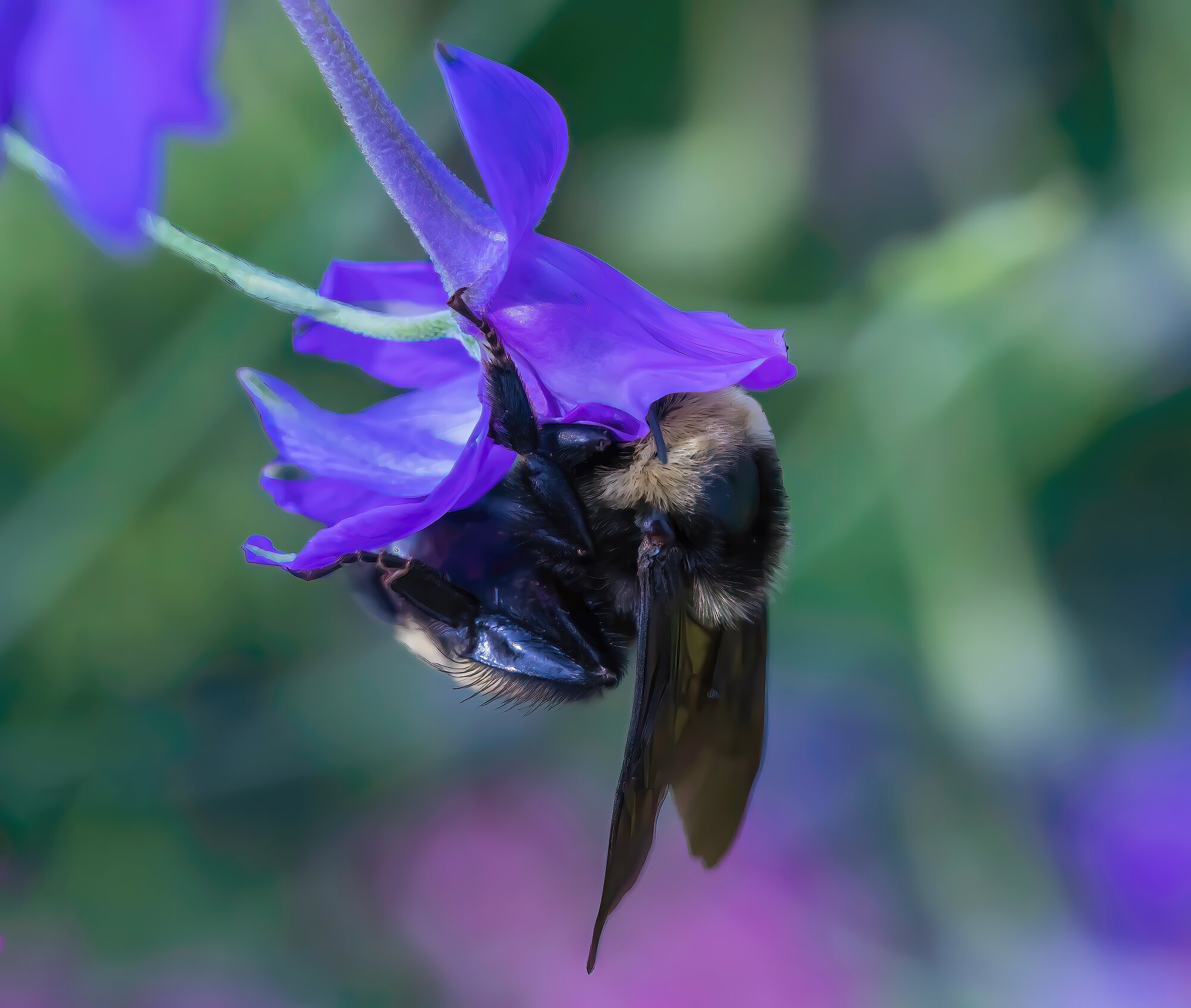
Only for long proboscises
The nectar is located deep inside the flower’s spur. It can primarily be reached by long-tongued bumblebees, which are therefore among the most important pollinators of field larkspur. But other insects have found a way to get to the nectar, too: short-tongued bumblebees bite into the spur from the outside, allowing them to access the nectar without pollinating the flower. Wild bees and butterflies also visit the flowers.
Field larkspur reproduces by seed. After flowering, pod-like fruits develop in which the seeds mature. Once ripe, the seeds fall to the ground. There, they can germinate as early as autumn and overwinter as young plants. This means that the life cycle of field larkspur is well adapted to the cultivation of winter cereals.
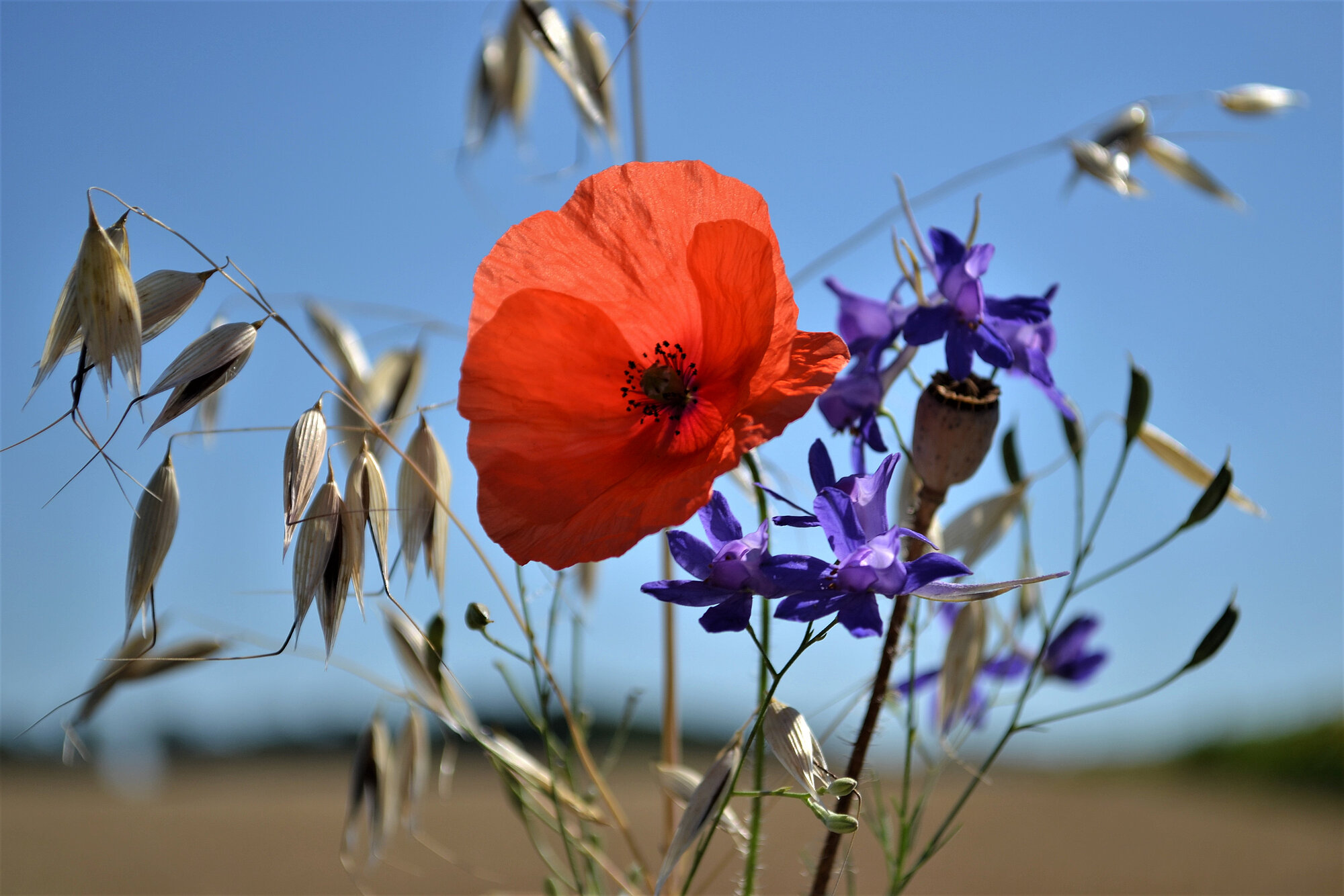
A child of the fields
Field larkspur is closely associated with agriculture. It grows in sunny cereal fields, along field margins and on fallow land, and prefers loose, calcareous soils. To germinate, it needs open areas of soil with little competition, such as those created by soil cultivation in agricultural fields. In the past, it often grew alongside cornflowers and red poppies, adding splashes of colour to many cereal fields.
From field companion to rarity
Field larkspur was once widespread across many regions of Germany. Today, it has become considerably rarer and is regularly found at only a few locations in many areas. Its decline is due, among other things, to more intensive agricultural practices, the use of herbicides, improved seed cleaning, and the loss of semi-natural field margins.
Many of its typical companion species have also become rare and some are now listed on Red Lists of threatened plants. The decline of this species-rich arable flora shows how dramatically the living conditions for wild plants have changed in modern agricultural landscapes.
To draw attention to the decline in biodiversity in our agricultural landscapes, field larkspur was chosen as the Flower of the year 2026.