
Butterfly of the Year 2026 - The Dark Meadow-Dock Blue
THE BUTTERFLY WITH THE DOUBLE SECRET
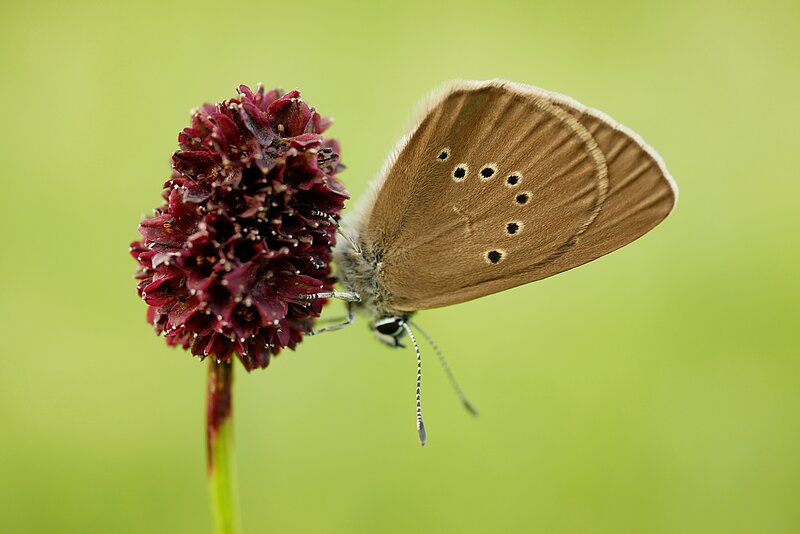
The Dark Meadow-Blue (Phengaris nausithous) was chosen as the Butterfly of the Year for 2026. At first glance, this small butterfly seems unremarkable. With a wingspan of about three centimeters and its cinnamon-brown coloration, it is barely noticeable among the flowers of a meadow. In males, the upper surface of the wings shimmers bluish in flight. But behind its unassuming appearance lies one of the most fascinating life stories in the local insect world.
The butterfly depends on two partners for its survival: the great burnet and certain species of knotted ants. If either is missing, the species cannot thrive. This extraordinary interdependence makes the butterfly a symbol of the delicate balance of our cultivated landscapes.
A LIFE ON THE GREAT MEWER
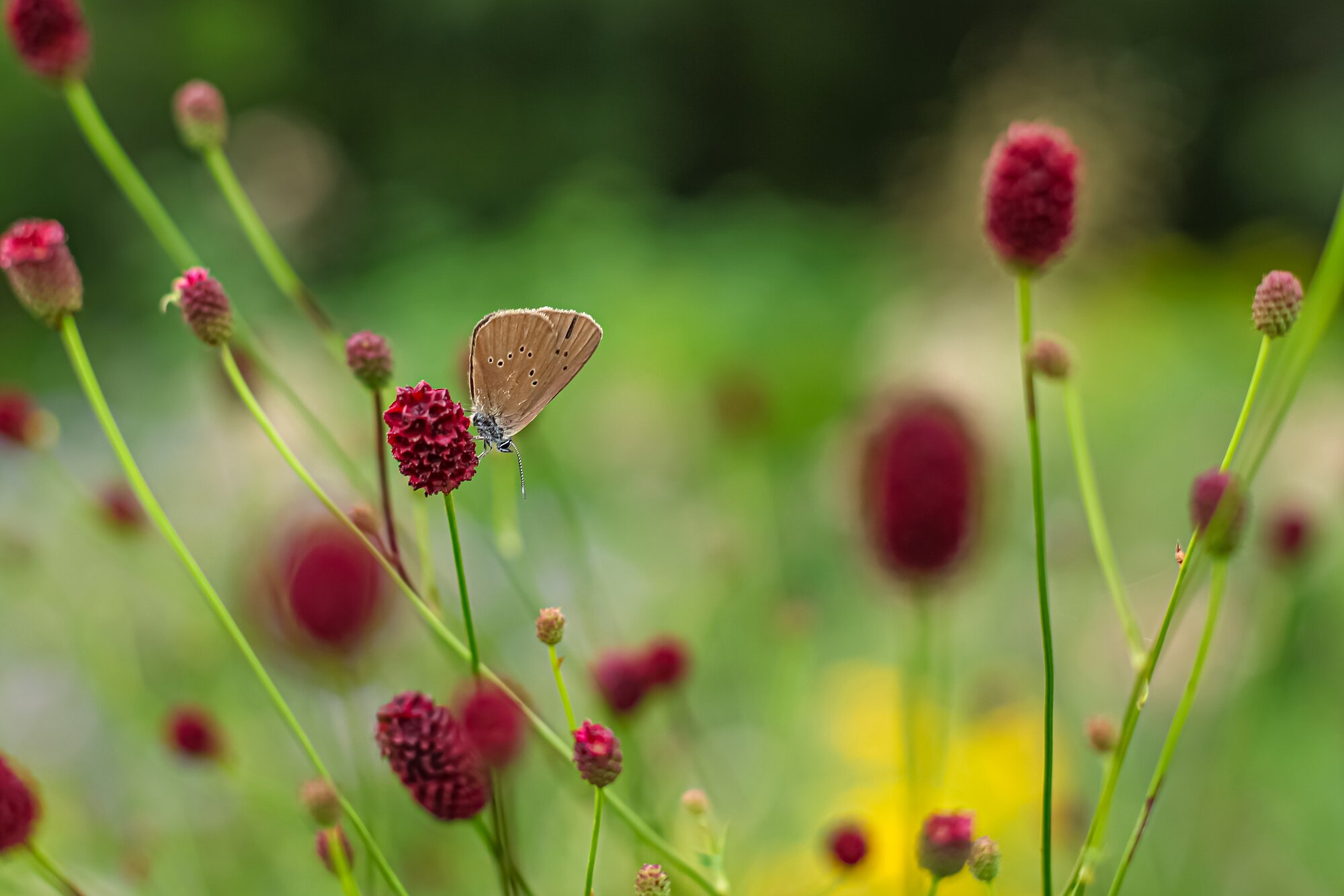
The great mewer (Sanguisorba officinalis) is much more than just a food source. The females lay their eggs on the inflorescences of this plant. After hatching, the young caterpillars initially feed on the flowers and develop there over several weeks.
For the next generation to survive, the great burnet must bloom at the right time. If the meadows are mowed too early or too often, the caterpillars cannot complete their development. Intensive fertilization and changes in the water balance also take a toll on the plant and favor highly competitive grasses. As a result, suitable habitats for the butterfly and numerous other insects are lost.
A TROJAN HORSE IN THE ANT NEST
After a few weeks, an extraordinary phase begins in the caterpillar’s life. It leaves the inflorescence and makes its way to the ground. There, ideally, it is discovered by a suitable knotted ant. Using special pheromones, the caterpillar tricks the ants into believing it is one of their own brood. The ants therefore carry it into their nest and take it in.
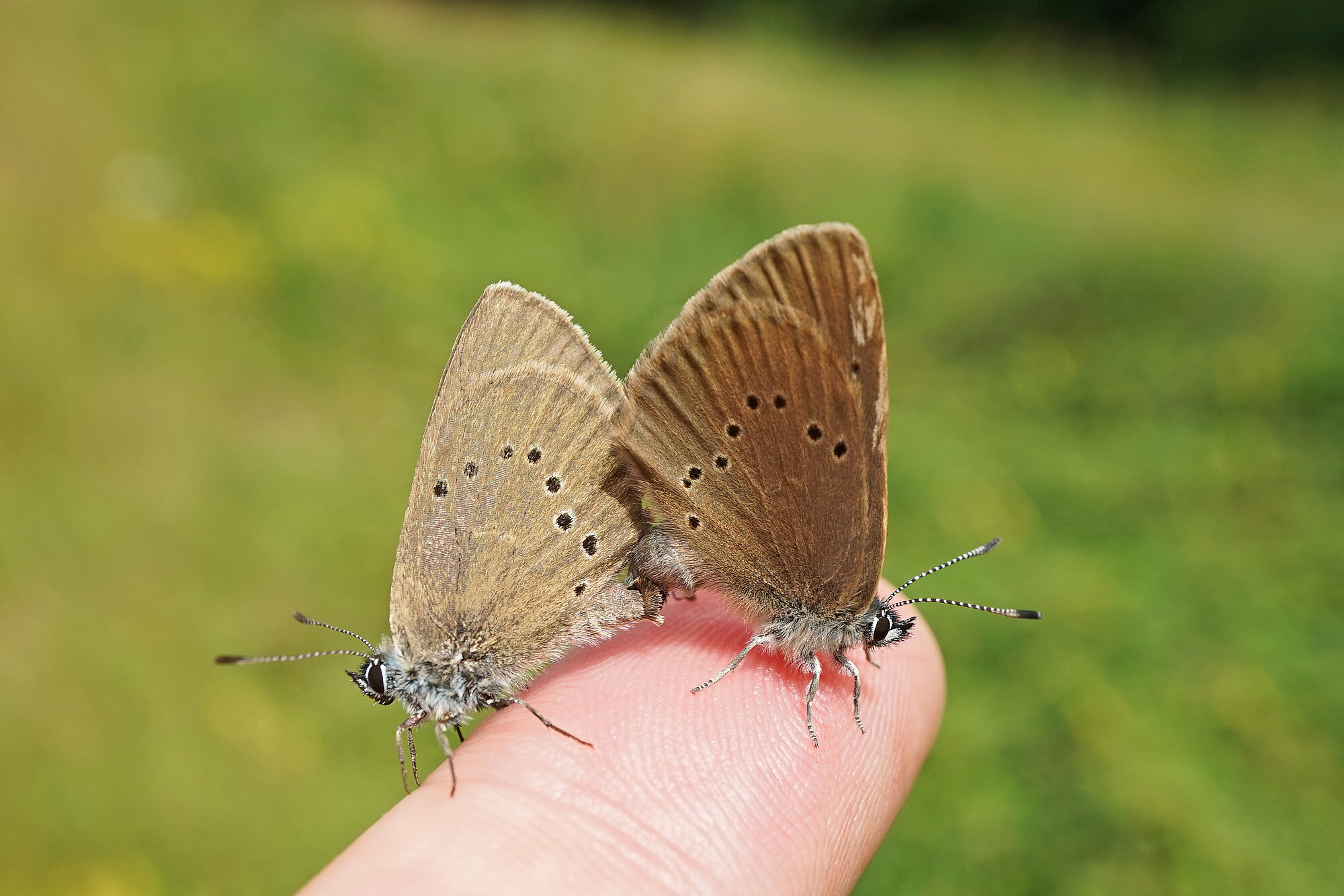
Inside the ant nest, the caterpillar continues to live in safety for many months, feeding on the ants’ brood. It is not until the following year that it pupates and develops into a butterfly. After emerging, the butterfly must quickly leave the nest, because its chemical camouflage no longer works. Its former helpers can once again become potential enemies.
AN AMBASSADOR FOR BIODIVERSITY
The Dark Meadow-Blue butterfly impressively demonstrates how closely plants, insects, and habitats are interconnected. Even small changes in land management can disrupt the interplay between meadow-blue, ants, and butterflies.
Among the most significant threats are the loss of suitable meadows, intensive grassland use, frequent mowing at inopportune times, and the drainage of wet sites. Increasing heat and drought can also harm the living conditions of the host ants. The Dark Meadow-Swallowtail is therefore considered an endangered species and is strictly protected throughout Europe.
Preserving its habitats requires tailored management: Suitable meadows must be mowed at the right time, and populations of the greater meadow knapweed as well as the nests of the host ants must be preserved. It is important to adapt management practices to local conditions and the species’ needs.
Flower-rich meadows and naturally designed green spaces can also provide valuable habitats for many other insects. Key factors include plant communities suited to the site, diverse vegetation, and management practices tailored to the respective species.
The 2026 Butterfly of the Year reminds us that biodiversity cannot be taken for granted. It depends on intact habitats, the interaction between different species, and the responsible management of our cultural landscape.