Butterfly of the year 2021: The Garden Tiger Moth
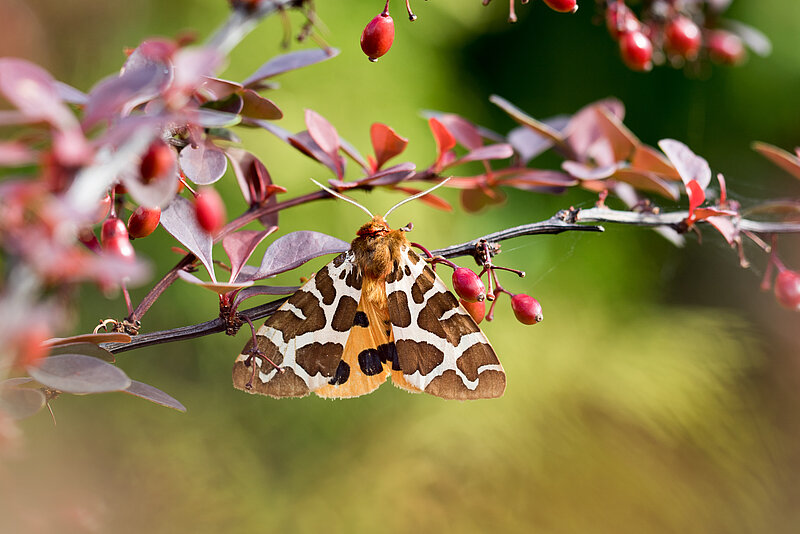
The Garden Tiger Moth is one of the larger moths found in Germany.
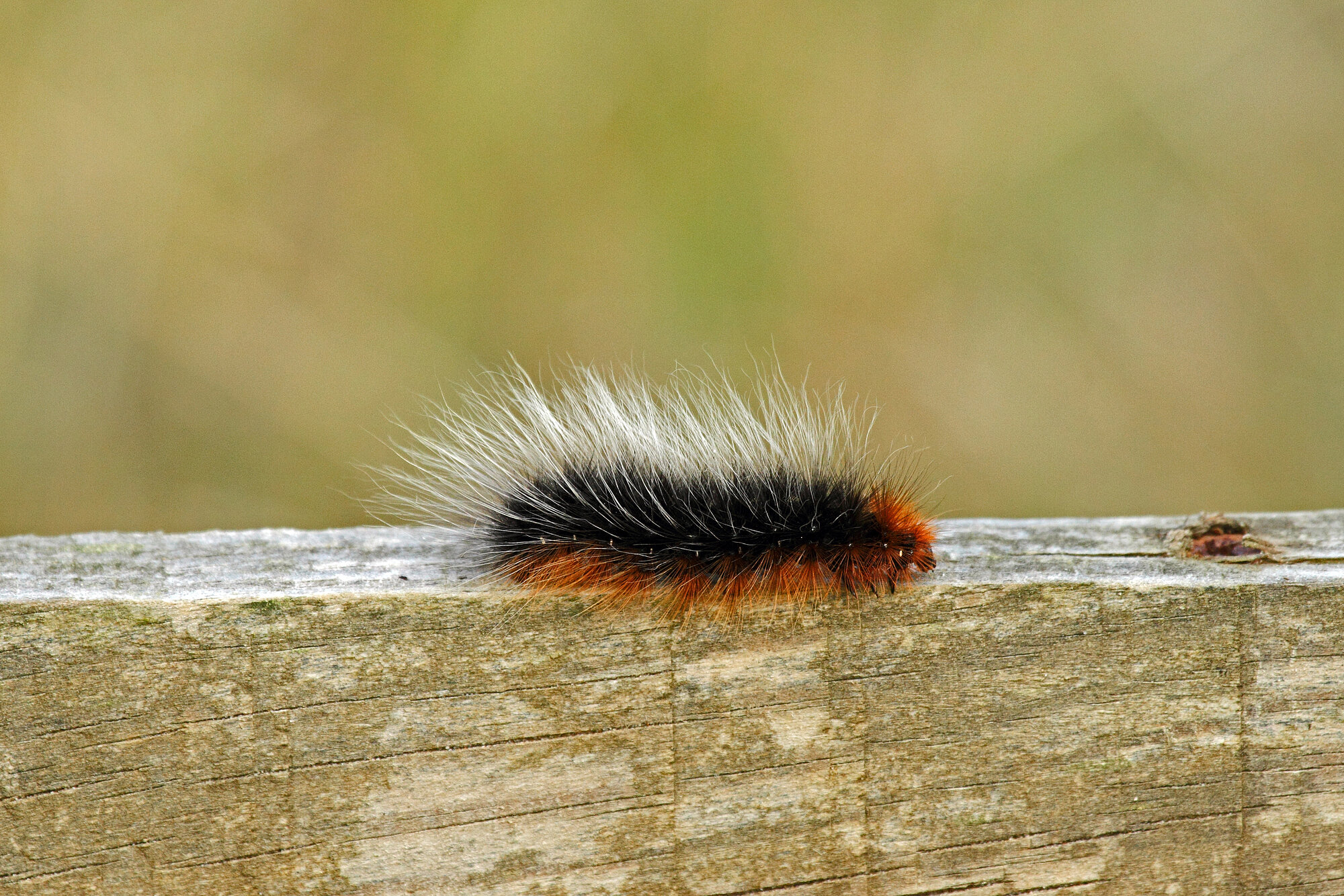
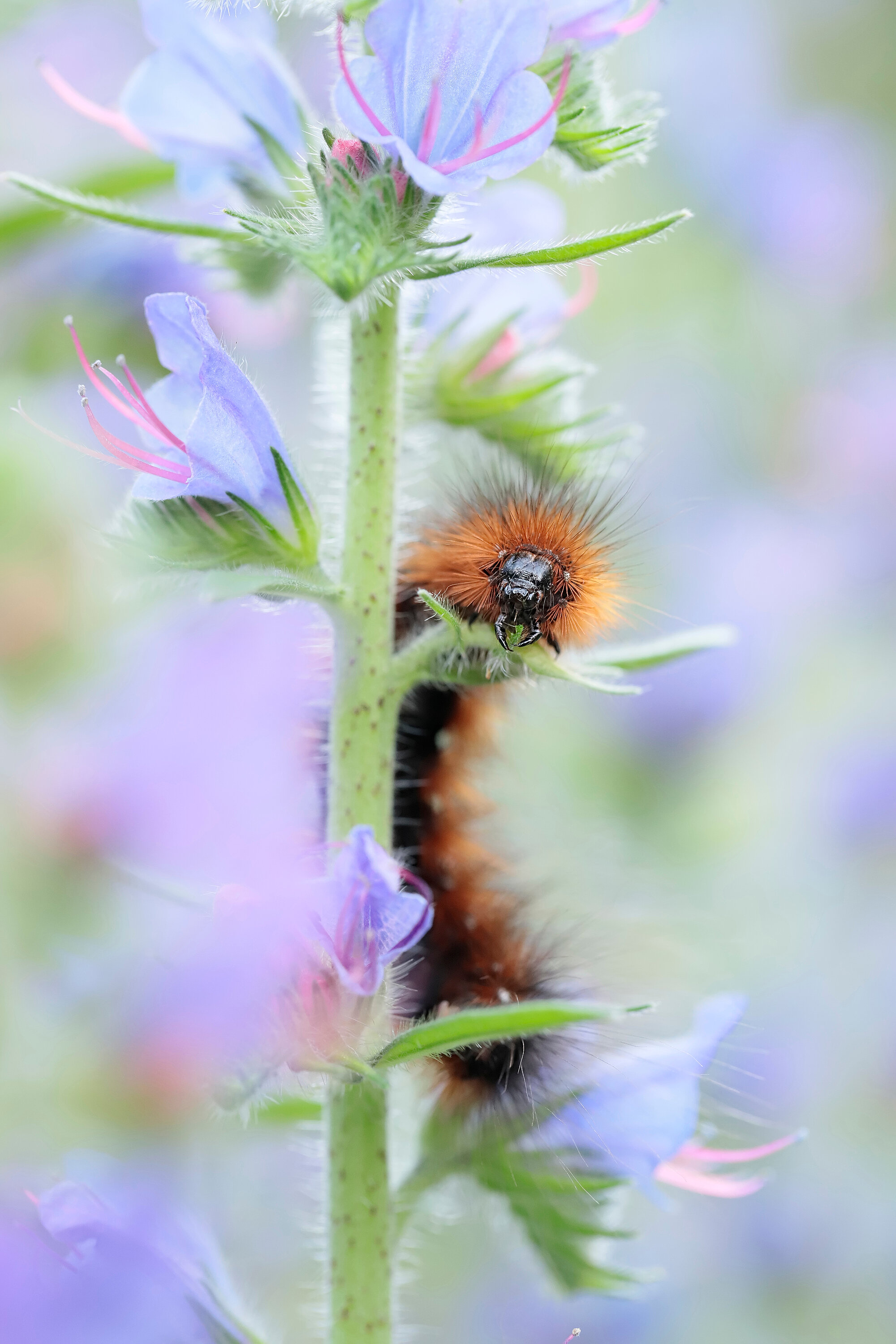
Caterpillar in a bear costume
The Garden Tiger Moth (Arctia caja) is a nocturnal moth belonging to the subfamily Arctiinae (tiger moths). It was chosen as Butterfly of the Year 2021 by the Association of Rhenish-Westphalian Lepidopterologists (butterfly experts) and the BUND NRW Nature Conservation Foundation. The moth owes its name to the dense, brownish hairs covering the older caterpillars, which give them a bear-like appearance.
With a wingspan of up to 65 millimeters, the Garden Tiger Moth is one of the larger moths found in Germany. It is mainly found in the temperate regions of Asia, Europe, and North America, where it inhabits open woodlands, meadows, open landscapes rich in shrubs, and near-natural gardens.
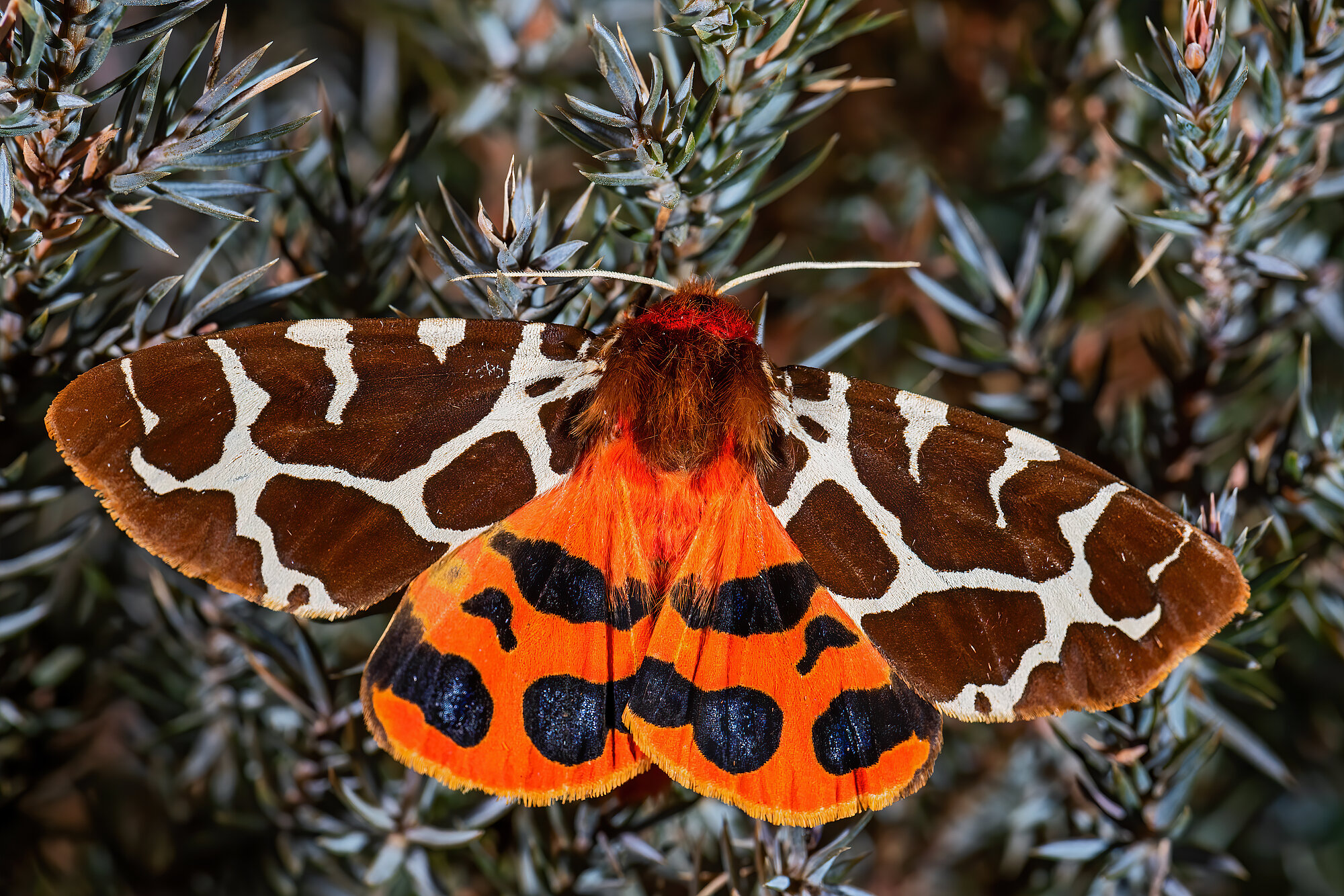
Red means danger
Its wings feature a striking color pattern that helps the moth camouflage itself and protect itself in dangerous situations. The brown forewings are marked with a coarse white net-like pattern, making the moth almost invisible among branches and patches of light and shadow during the day. The hindwings, on the other hand, are orange-red with large black spots. This conspicuous pattern serves as a warning to predators that the moth is unpalatable. By suddenly opening its forewings, it can also startle birds with the flash of its red hindwings, giving it enough time to escape.
The Garden Tiger Moth produces only one generation per year and flies during the summer, from July to September. During this period, however, it does not feed and therefore has a relatively short lifespan. As a nocturnal moth, it is rarely seen. It can most commonly be spotted near light sources, which it is often attracted to.
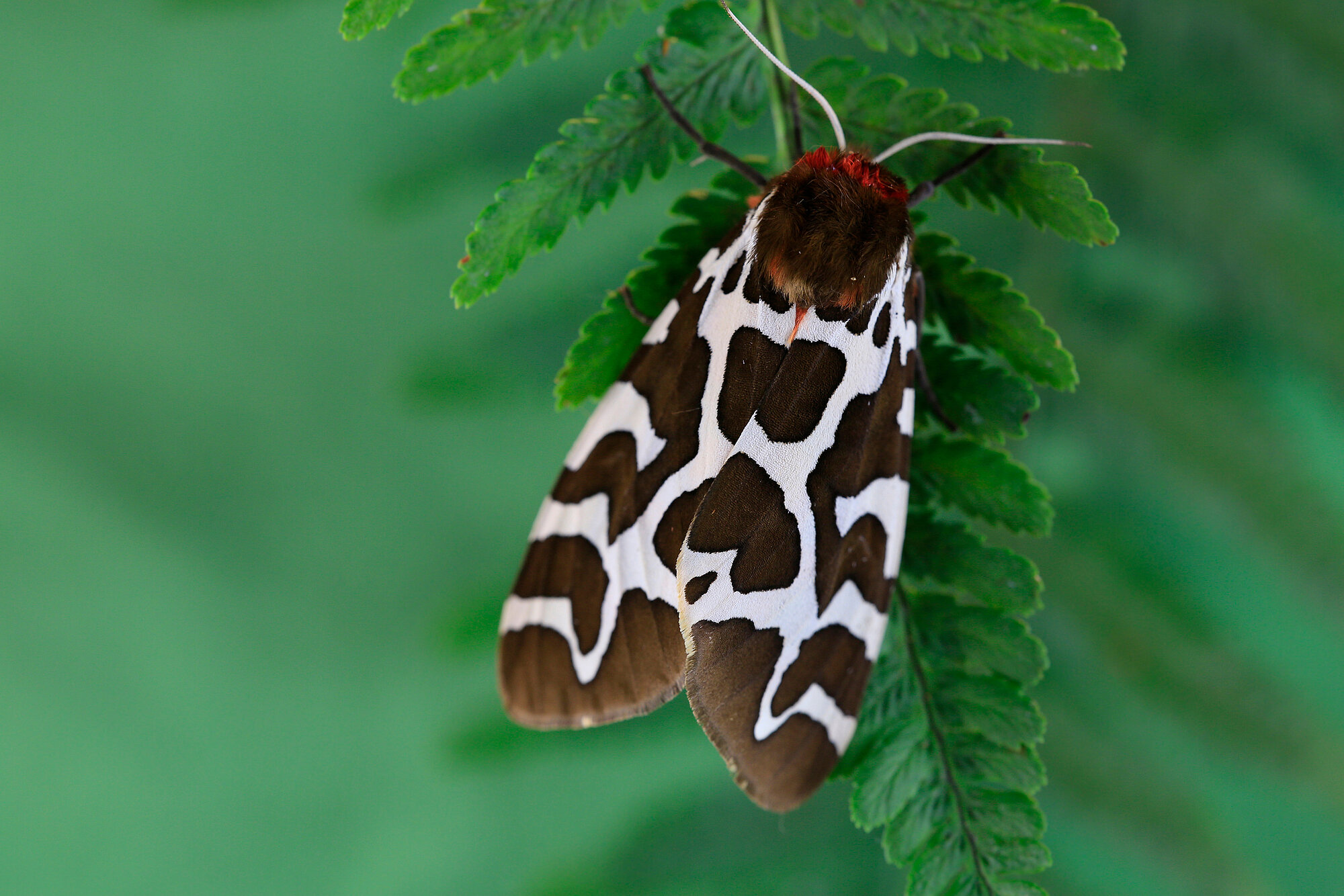
It doesn’t like artificial light
However, these very artificial light sources also pose a major problem for the Garden Tiger Moth, which normally relies on moonlight for orientation. Artificial illumination from sources such as streetlights and industrial lighting confuses the moth, causing it to fly around aimlessly. This leads to severe exhaustion, making it easy prey for predators and making it almost impossible for the moth to find a mate.
In addition to light pollution, the intensification of agriculture and the loss of hedgerows also pose a threat to the Garden Tiger Moth. Populations of this species are declining throughout Germany, and it is listed on Germany’s early warning list of threatened species. In Baden-Württemberg and Saarland, it is already classified as endangered.