
Bird of the Year 2027 - The House Martin
The Little Messenger of Summer
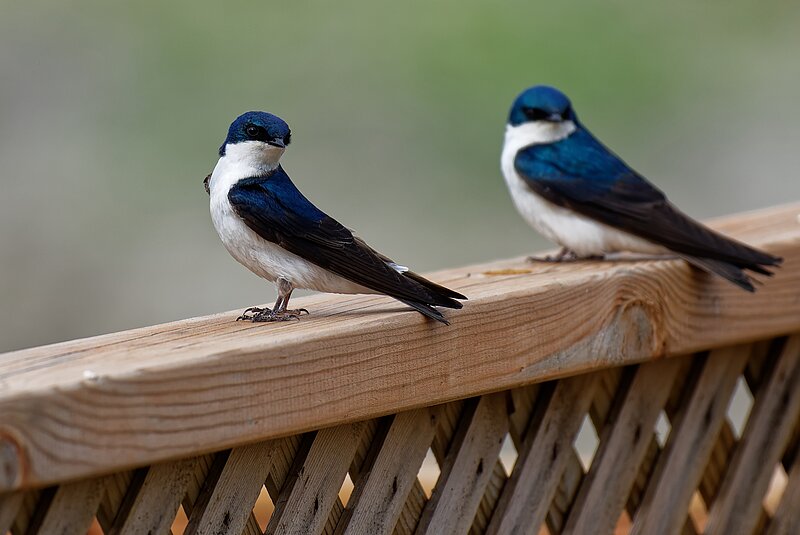
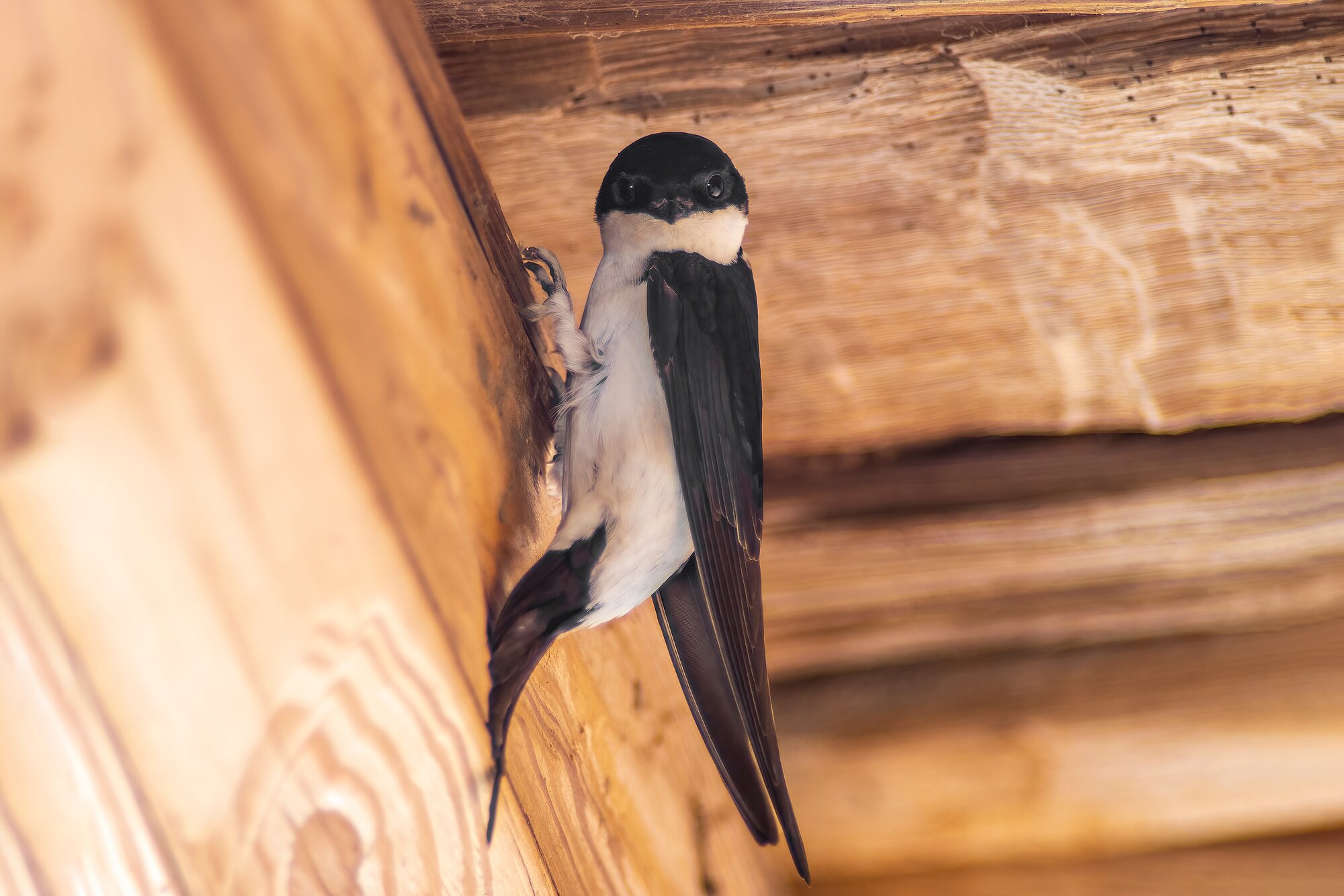
The house martin (Delichon urbicum) was chosen as Bird of the Year 2027. Hardly any other bird species is as closely connected to humans as this skilled flyer. Year after year, it returns to Europe from its wintering grounds south of the Sahara, and its arrival heralds the beginning of the warm season.
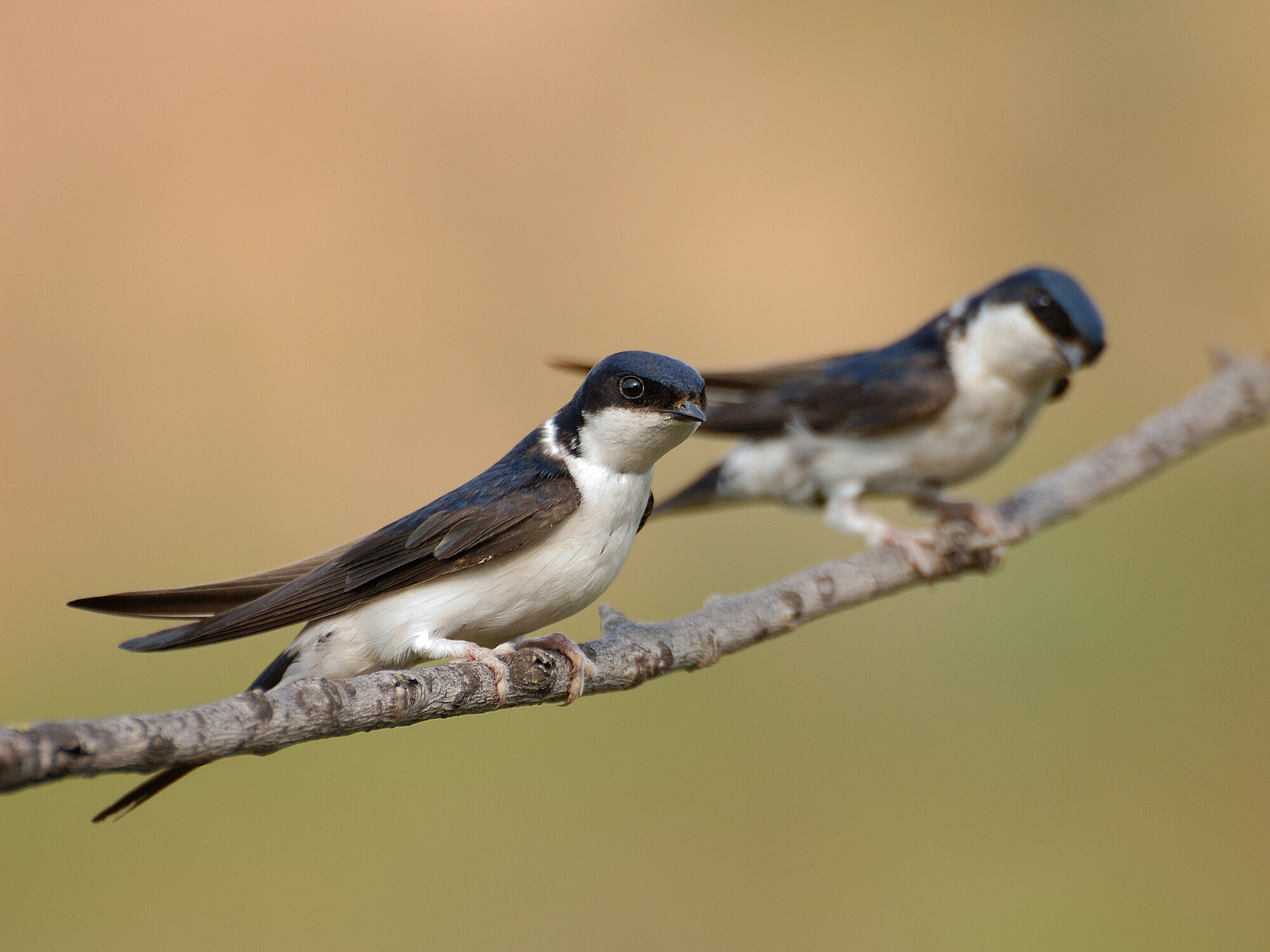
With its white underparts, striking white rump, and dark, glossy, metallic-blue plumage, the house martin is easily recognizable. Its flying skills were particularly impressive: while hunting for small insects, it glides seemingly effortlessly through the air and spends a large part of its life in flight.
Master Builder of the House
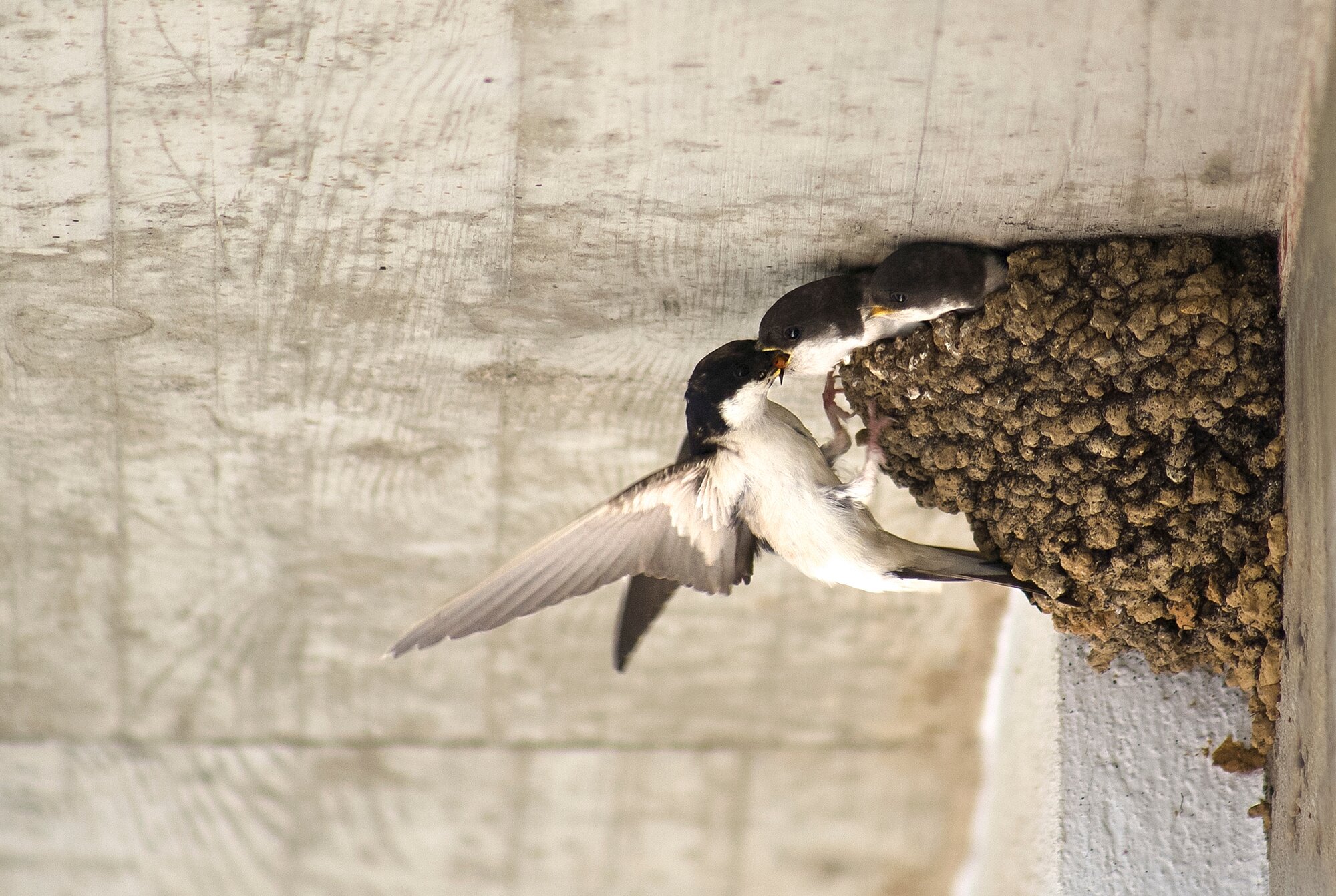
The house martin is one of the best-known building-nesting birds among our native species. Under roof overhangs and facade projections, it builds elaborate, nearly enclosed mud nests with a small entrance hole. This often results in entire colonies where many house martins nest close together.
To build their nests, the birds collect damp mud and mix it with saliva. They shape this mixture into small pellets, which they assemble piece by piece into a nest. Up to 1,500 mud pellets may be needed for a single nest. The inside of the nest is lined with feathers and other soft materials.
A Master of the Skies
The house martin’s diet consists almost exclusively of flying insects. It catches mosquitoes, flies, and other small insects directly while in flight—often even at higher altitudes. In this way, the house martin naturally helps regulate insect populations.
Even outside the breeding season, the house martin is a sociable bird. Especially before their fall migration, the birds gather in large flocks before embarking on their long journey to Africa. There they spend the winter before returning to their breeding grounds the following spring.
When Nesting Sites Disappear
Although the house martin is familiar to many people, its population has been declining for years. Modern and renovated buildings often offer few suitable nesting opportunities. Smooth facades make it difficult to build nests, while existing nests are removed in some places.
At the same time, increasing soil sealing and urban development are causing the disappearance of important clay puddles, which the birds use as building material. The decline in flying insects also makes it harder for them to find food. Hot and dry summers can add to the strain.
An Ambassador for Natural Habitats
By being named Bird of the Year 2027, the house martin draws attention to the importance of natural habitats and a swallow-friendly environment. Mud puddles, suitable nesting sites, and an ample supply of insects are essential for these little flying acrobats to thrive in our region.
Everyone can do their part: By preserving existing nests, providing artificial nesting aids, and designing your garden to be as natural as possible, you can create valuable habitats. Because where people and nature coexist, the house martin can continue to enrich our villages, farms, and communities with its lively presence.