
Bird of the Year 2026 - The Partridge

A Resident of the Open Countryside
The partridge (Perdix perdix) is the Bird of the Year for 2026. This unassuming gallinaceous bird symbolizes the diversity of our agricultural landscapes. It finds suitable habitats in fields, meadows, and fallow land, provided these areas are diverse and offer sufficient food and cover. However, such areas have become rarer in many places over the past few decades. Its selection as Bird of the Year highlights the importance of a diverse and vibrant open countryside.
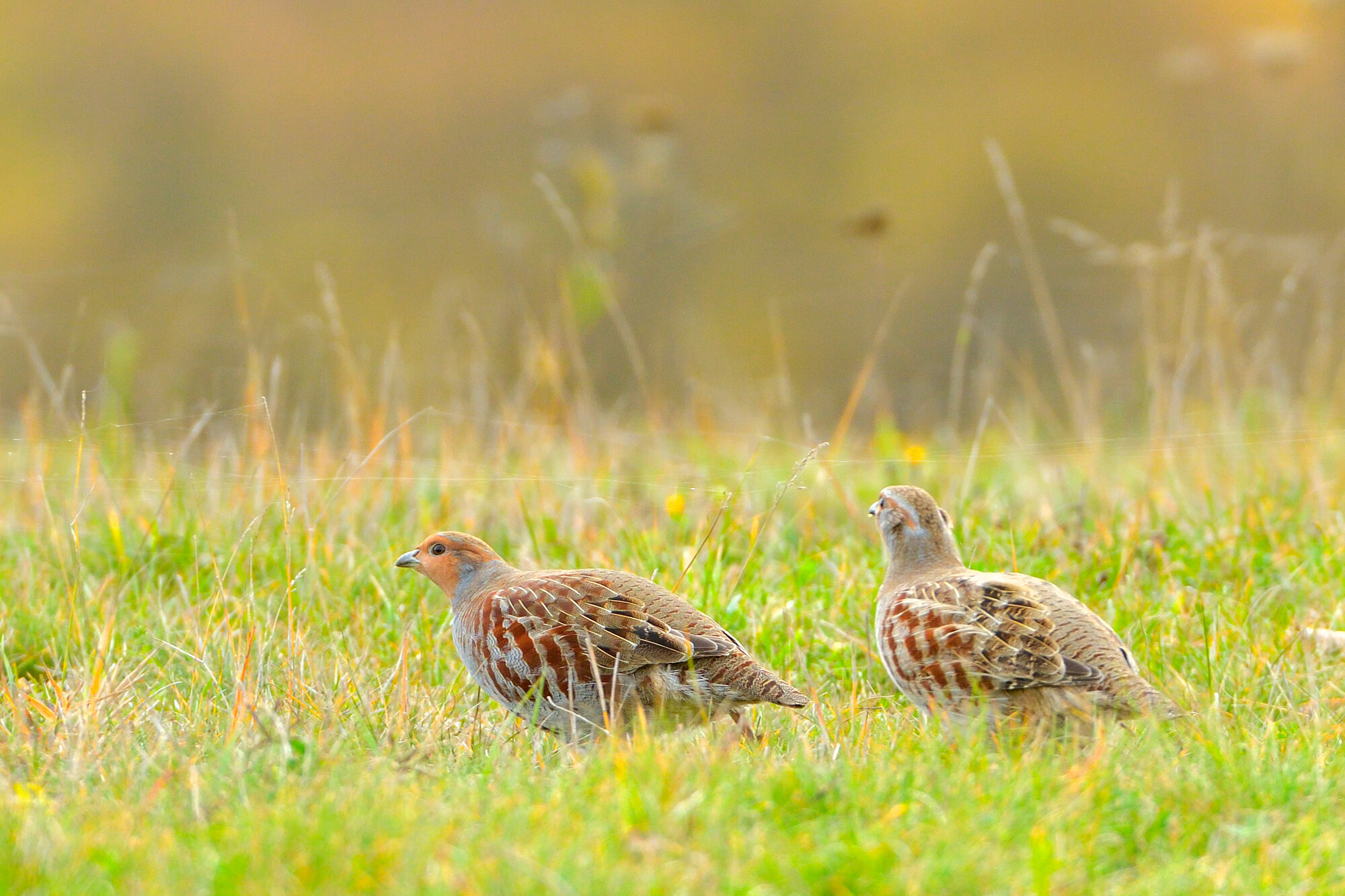
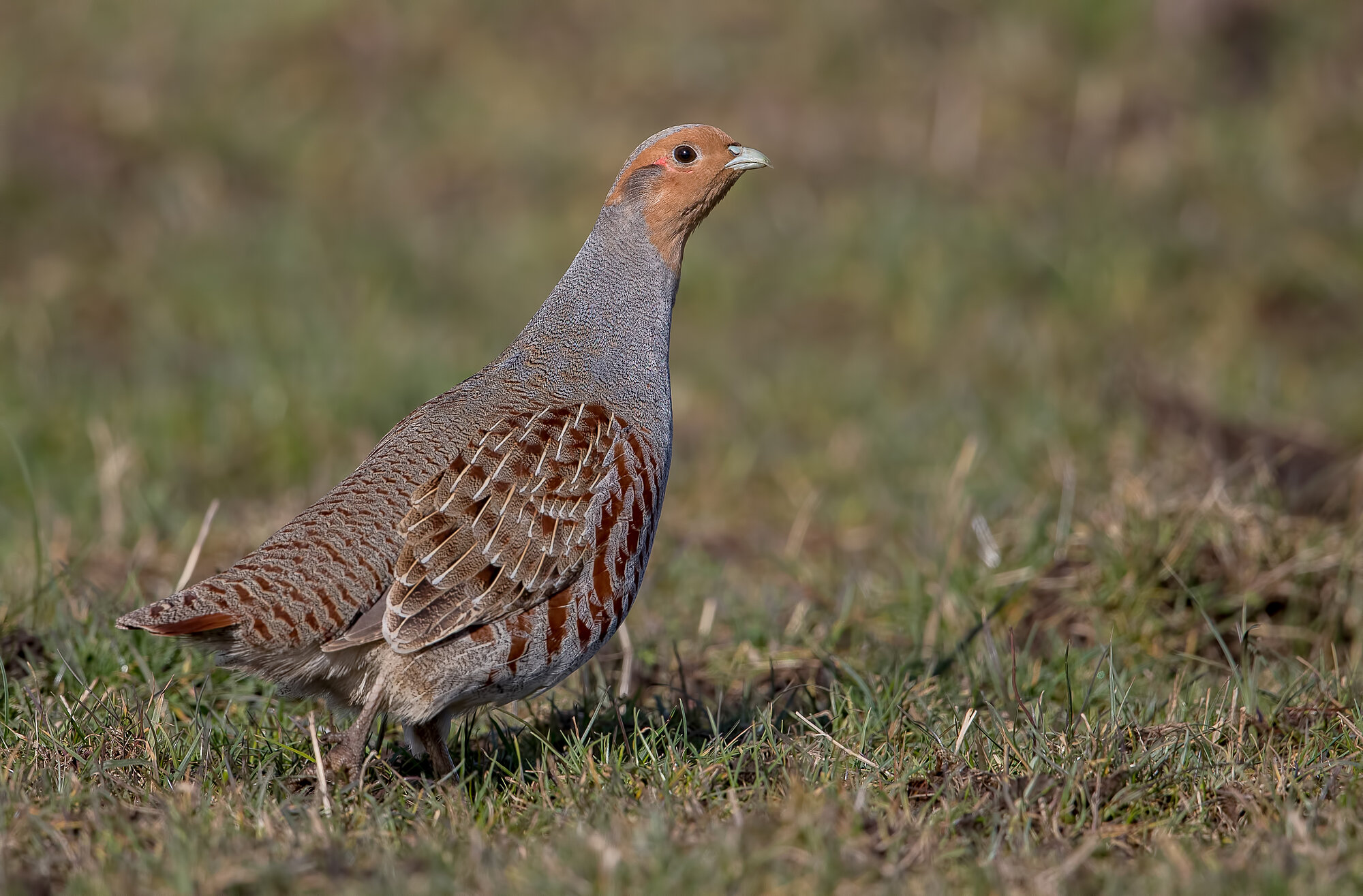
With its brownish-gray plumage, the partridge is exceptionally well-camouflaged. It spends most of its time on the ground and usually takes flight only when danger threatens. Particularly characteristic is the males’ harsh territorial call, which echoes across the fields in the early morning and late evening hours. The bird’s name is also associated with this distinctive call.
At Home Among Fields and Meadows
The partridge prefers open, diverse agricultural landscapes with fields, meadows, hedgerows, strips of tall grass, and fallow land. These features offer protection from predators and provide suitable areas for foraging and nesting.
Adult partridges feed primarily on seeds, grains, and plant parts. For the chicks, however, insects are particularly important. In the first weeks of life, they need plenty of animal-based food to develop healthily. A diverse field landscape with wild herbs and sufficient insects is therefore an important prerequisite for breeding success.
Family Life on the Ground
During the breeding season, partridges live in pairs and care for their young together. The female lays her eggs in a well-hidden nest on the ground. A clutch can contain up to 20 eggs.
After hatching, the parents lead their chicks through the fields and protect them from danger. The young birds grow up relatively quickly. Outside the breeding season, partridges often form small groups known as “chains.” Together, they forage for food and use the vegetation for cover.
Fields Teeming with Life
Just a few decades ago, the partridge was a common inhabitant of the agricultural landscape. Today, it is considered critically endangered in Germany. Populations have declined significantly in recent decades. Among the main causes are the loss of hedgerows, field margins, and fallow land, as well as the increasing homogenization of agricultural land.
Where wild herbs and flowering plants are declining, many insects also find less food and habitat. This has a particularly significant impact on the rearing of partridge chicks. At the same time, cleared landscapes often lack suitable nesting sites and sufficient cover.
A Symbol of Greater Biodiversity
By being named Bird of the Year 2026, the partridge draws attention to the importance of diverse agricultural landscapes. Where wild herbs bloom, insects find food, and refuges are preserved, valuable habitats for many animal and plant species are created.
The partridge demonstrates how closely agriculture and biodiversity are intertwined. Lively fields not only serve food production but also provide a habitat for numerous species. Protecting the partridge thus also contributes to preserving a species-rich and livable cultural landscape.